Before the Automobile Asked, the Bicycle Demanded: The Cyclists Who Built America's Roads
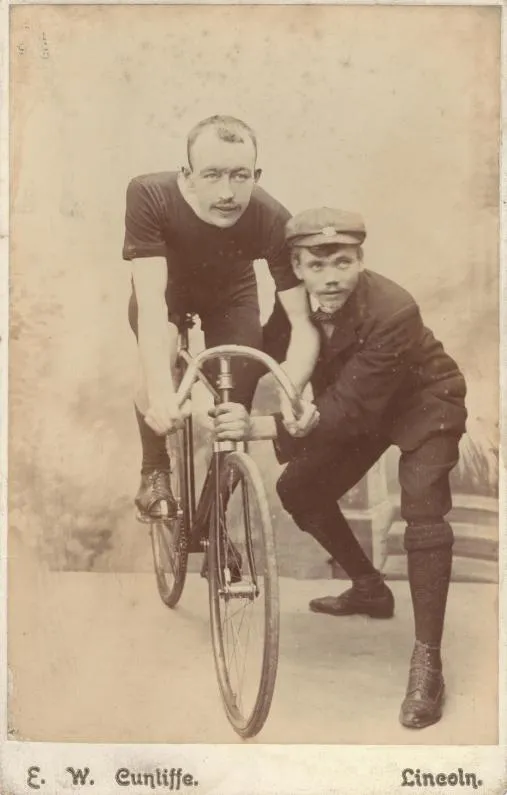
Photo: East Riding Archives, No restrictions, via Wikimedia Commons
There's a certain irony baked into every smooth stretch of American asphalt: the people who demanded it weren't drivers. They were cyclists — members of a 19th-century wheeled subculture that car enthusiasts today sometimes resent. Before the automobile existed in any meaningful number, the bicycle had already fought for, and largely won, the war for paved roads.
America's Roads Were an Afterthought
In the 1870s and 1880s, the vast majority of American roads were dirt — which is a generous word for what they actually were: mud in spring, ruts in summer, frozen corrugation in winter. Outside of a handful of cities, pavement was a novelty. Rural mail carriers, farmers hauling goods, and anyone with wheels simply endured it.
Then the bicycle boom hit. The safety bicycle — two equal wheels, pneumatic tires, a frame a normal person could mount — turned cycling into a national craze by 1890s. Millions of Americans were suddenly riding for recreation and commuting, and they were riding on garbage.
Cyclists had a unique problem: they felt every defect in the road surface directly, in their hands, spines, and tires. A farmer in a wagon could tolerate a rut; a cyclist hit a rut and woke up the next morning regretting it. Nobody had a sharper economic incentive for smooth pavement than the wheelmen.
The Good Roads Movement Rides Out
Their answer was the Good Roads Movement, and its headquarters of sorts was the League of American Wheelmen — at its peak a massive national organization with real political muscle. The League didn't just complain; it organized. It published road-building manuals, held conventions, and lobbied state legislatures with a sophistication that rural politicians had rarely encountered.
Their most famous stunt came in 1896, when the League partnered with the U.S. Department of Agriculture to send a fact-finding expedition — Major William F. Cody, better known as Buffalo Bill, was even involved in early publicity efforts — across the country to document road conditions. The resulting reports made the case in hard numbers: bad roads were a tax on every farmer's profit. That framing was deliberate and brilliant. Cyclists couldn't win by arguing for bike lanes; they won by arguing that good pavement was a rural economic necessity.
It worked. States created highway departments. New Jersey passed landmark road legislation in 1891 with the League's fingerprints all over it. Federal aid for roads followed in 1916 — built on decades of groundwork laid by bicycle advocates.
The Car Inherits the Kingdom
Here's where the story takes its turn. The automobile arrived and found something remarkable waiting for it: an existing political and technical infrastructure for road-building, along with engineering standards about drainage, grading, and surface design that cyclists had helped develop. Early road-building manuals written for bicycles were simply adopted and extended for motor traffic.
The bicycle, in other words, built the nursery. The automobile grew up in it and then, like many heirs, wrote the family out of the story. By the 1920s, motorists were lobbying for roads from cyclists — the same organizations that had demanded pavement now found themselves pushed to the shoulder, literally and politically. The League of American Wheelmen eventually faded, its mission declared accomplished.
The Debt We Ride Over
Modern cycling advocates have pointed out the uncomfortable symmetry: cars use infrastructure invented on behalf of bikes, while cyclists today fight for slivers of that same pavement. The argument isn't just rhetorical. The original moral claim — that public roads are for everyone on wheels, not just the heaviest vehicles — was the founding argument of the Good Roads Movement itself.
So the next time your car glides down a freshly paved road, spare a thought for the men and women in wool cycling knickers who decided, 130 years ago, that mud was unacceptable. They didn't just want a smooth ride. They built one — and then handed over the keys.