The Ancient Way
For most of human history, if you wanted to watch a race, you stood at the starting line and stayed there. Runners would line up in front of the crowd, sprint toward a distant marker — a tree, a stone, another group of spectators — and then turn around and come back to where they started. The finish line was the starting line. The crowd never moved.
This wasn't some arbitrary tradition. It made perfect practical sense. In ancient Greece, spectators at the Olympic Games gathered in the stadium and watched runners head out toward a turning post and return. The drama was in seeing athletes disappear into the distance and then reappear, battling for position as they came back into view.
The same format dominated racing for centuries. Medieval village races, colonial American foot races, even the early modern Olympics followed this pattern. Races were round trips. You started where you finished, and the crowd stayed put to watch both the departure and the return.
The finish line — if it existed at all — was just painted dirt or a rope stretched across the same spot where runners had begun. There was no separate finish area, no dramatic final stretch with crowds lined up to witness the climactic moment. The climax happened wherever the starting line was.
The Henley Problem
The system worked fine for small local races, but by the 1850s, organized athletics were getting bigger and more complicated. The problem became obvious at events like the Henley Royal Regatta, where thousands of spectators crowded around the starting area to watch rowing races begin and end at the same point.
The logistics were becoming impossible. At Henley, spectators would pack the riverbank at the starting line, creating a massive crowd that made it difficult for rowers to even reach their starting positions. When the boats returned from their downstream journey, the same crowd that had cheered their departure now blocked the view of their return.
But the real crisis came at track and field meets, where multiple events were happening simultaneously. If every race started and finished at the same location, you couldn't run overlapping events. Runners finishing one race would collide with runners starting another. The traditional format was breaking down under its own success.
The Stamford Bridge Disaster
The moment that changed everything happened at Stamford Bridge in London during the 1860s — not the famous football stadium, but the original Stamford Bridge athletic grounds that preceded it. The London Athletic Club was hosting one of the largest track meets in British history, with thousands of spectators and dozens of events scheduled throughout the day.
The meet organizers had planned everything around the traditional format: races would start and finish at the main grandstand, where paying spectators had the best view. But as the day progressed, the crowd control situation became increasingly chaotic.
The breaking point came during a highly anticipated mile race. As the runners headed out for their distant turn, spectators began moving along the track to follow the action, abandoning their seats in the grandstand. When the runners came back around for their finish, they found the track completely blocked by spectators who had wandered onto the course.
The race had to be stopped and restarted multiple times. Runners were tripping over spectators. Officials couldn't see who had actually won. The meet was turning into a disaster, and the paying customers in the grandstand were furious that they couldn't see anything.
The Desperate Solution
Faced with complete chaos, the meet director made a desperate decision that seemed to violate centuries of racing tradition. Instead of starting the next race at the grandstand and running away from the crowd, he moved the starting line to the far end of the track and had the runners finish in front of the paying spectators.
It was supposed to be a temporary fix to get through the rest of the meet. The idea was simple: if the runners started far away and finished at the grandstand, spectators would stay in their seats to watch the climactic finish instead of wandering around the track following the action.
But something unexpected happened. The new format was dramatically more exciting.
Instead of watching runners disappear into the distance and then return, spectators now watched them approach from far away, building tension as they got closer. The final sprint to the finish line became a sustained crescendo of drama, with the crowd able to see exactly who was winning as runners entered the home stretch.
The Accidental Drama
The reversed format solved the crowd control problem, but it also accidentally created something that had never existed before: the dramatic finish-line sprint. Under the old system, races ended where they began, often with runners so exhausted from their return journey that the finish was more of a relieved collapse than a thrilling sprint.
But with the new format, runners were saving energy for a final kick toward the crowd. The finish line became a destination rather than just a return to the starting point. Spectators could watch strategy unfold as runners positioned themselves for final sprints, and the last few hundred yards became the most exciting part of every race.
The London newspapers went wild for the new format. Instead of reporting that "Smith completed the course in good time," they could write about "Smith's thrilling final sprint to victory as the crowd roared its approval." The finish line had become a stage for drama rather than just a measuring point.
The Format That Conquered the World
Within a decade, the reversed format had spread to track meets across Britain and then to America. The 1896 Olympics in Athens used the new system for most track events, and by 1900 it was the international standard. Races now started away from the main spectator areas and finished with a dramatic sprint toward the crowd.
The change transformed how people experienced racing. The finish line became the focal point of every event, the place where drama reached its peak. Photographers positioned themselves at the finish to capture the decisive moment. Timekeepers focused on the finish line as the crucial measurement point.
More importantly, the new format changed how races were run strategically. Runners began saving energy for final kicks, developing the tactical approaches that define modern distance racing. The concept of "outkicking" an opponent in the final stretch only became possible once the finish line was positioned as a dramatic destination.
The Line That Defines Everything
Today, it's impossible to imagine a race that doesn't end with a sprint toward a finish line positioned for maximum drama. From the Kentucky Derby to the Boston Marathon, every major race follows the format that was accidentally invented at a chaotic British track meet when organizers were just trying to keep spectators from wandering onto the course.
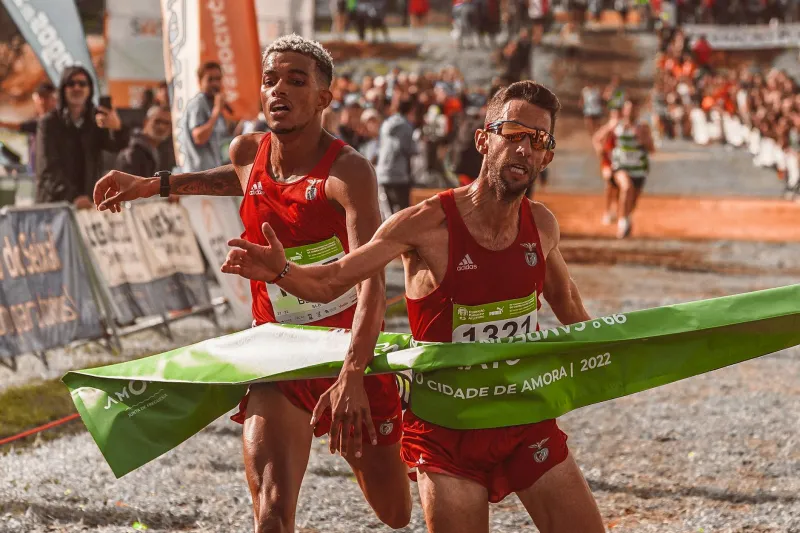
The finish line tape stretched across every track, the photographers clustered at every race's end, the final sprint that defines athletic drama — all of it traces back to a desperate crowd-control measure that accidentally discovered how to make racing more exciting.
We think of the finish-line sprint as the natural culmination of human competition, but it's actually a relatively recent invention. For most of history, races ended where they began. It took a logistical disaster and a panicked meet director to create the dramatic finale that now defines how the world experiences every race.