Inside the Wall: The Teenagers Who Ran the Scoreboard on Guesswork
Inside the Wall: The Teenagers Who Ran the Scoreboard on Guesswork
If you've ever sat in the bleachers at Wrigley Field and watched the hand-operated scoreboard in center field flip a number, you've witnessed a technology that is, at its core, unchanged from the 1930s. A person behind the wall picks up a metal plate with a number on it and slots it into a frame. That's it. That's the system.
For most of baseball's first century, that was the system everywhere — and it was far messier, far less reliable, and far more creative than the clean green surface of Wrigley makes it look today.
The Chalkboard Era
Early professional baseball scoreboards were, in the most literal sense, just boards. Chalkboards, wooden panels, sometimes just painted walls with numbers written in chalk or paint by whoever happened to be standing nearby. In the 1870s and 1880s, when the National League was still establishing itself, there was no universal expectation that a ballpark would even have a scoreboard. Fans tracked the game themselves — in their heads, on programs, by asking the person next to them.
As attendance grew and ballparks became permanent structures, the demand for real-time information grew with it. The problem was that "real-time" in the 1880s meant something very different than it does now. There were no public address systems. There were no electronics. There was no mechanism by which information from the field could instantly reach a board on the outfield wall.
The solution was human infrastructure. Teams hired scoreboard operators — often teenagers who worked for almost nothing — and built small wooden booths or crawl spaces inside the outfield wall itself. The operator would receive information through whatever channel was available: a telephone line connected to the press box, a series of hand signals from someone stationed near the dugout, or in some parks, a primitive semaphore system involving flags or colored panels.
The Guessing Problem
Here's where the story gets genuinely strange. The telephone connections were unreliable. The signal relays were slow. The operators were teenagers working in dim, cramped spaces with no direct view of the field. And the games moved faster than the information did.
So operators guessed. Not all the time, and not recklessly — but often enough that it was an acknowledged part of the job. If a runner was clearly on second base and the phone line had gone quiet, you put up a two. If the pitcher had been on the mound for two innings and the count looked like it was moving toward a third, you anticipated. You used context. You made educated assumptions and hoped the phone would ring before anyone noticed.
Fans knew this. Not explicitly, perhaps, but there was a shared cultural understanding in early twentieth-century baseball that the scoreboard was a rough approximation of reality, not a precise feed. Arguments about what the board showed versus what had actually happened were common enough that scoreboard errors became a minor folklore of the game — the kind of thing you'd mention to someone the next day at work.
In some parks, operators working out-of-town game scores — displayed for fans following the pennant race — had even more latitude. Information from a game in St. Louis might arrive ten or fifteen minutes late, if it arrived at all. The operator would fill the gap with their best estimate and update when the wire came through.
The Mechanical Revolution
The first major upgrade came in the 1930s and 1940s, when parks began installing mechanical scoreboards with electric motors that could flip numbered panels remotely. The operator no longer had to physically climb a ladder or reach into a frame — they could sit at a control panel and throw a switch. The boards became larger and more legible, often incorporating lighted elements for night games.
But they were still manual in the most important sense: a human being was still making the call about what number to display and when. The information chain — from the field, to a spotter, to a phone, to an operator, to the board — was still full of lag and human judgment.
The electronic scoreboard arrived in earnest in the 1960s. The Houston Astrodome, which opened in 1965, debuted what was then called the "Astrodome Scoreboard" — a massive electrified display that could show animations, graphics, and instant information. It was a sensation. It was also, by modern standards, extraordinarily primitive: a series of light bulbs arranged in grids, controlled by punch-card programming.
What the LED Era Actually Changed
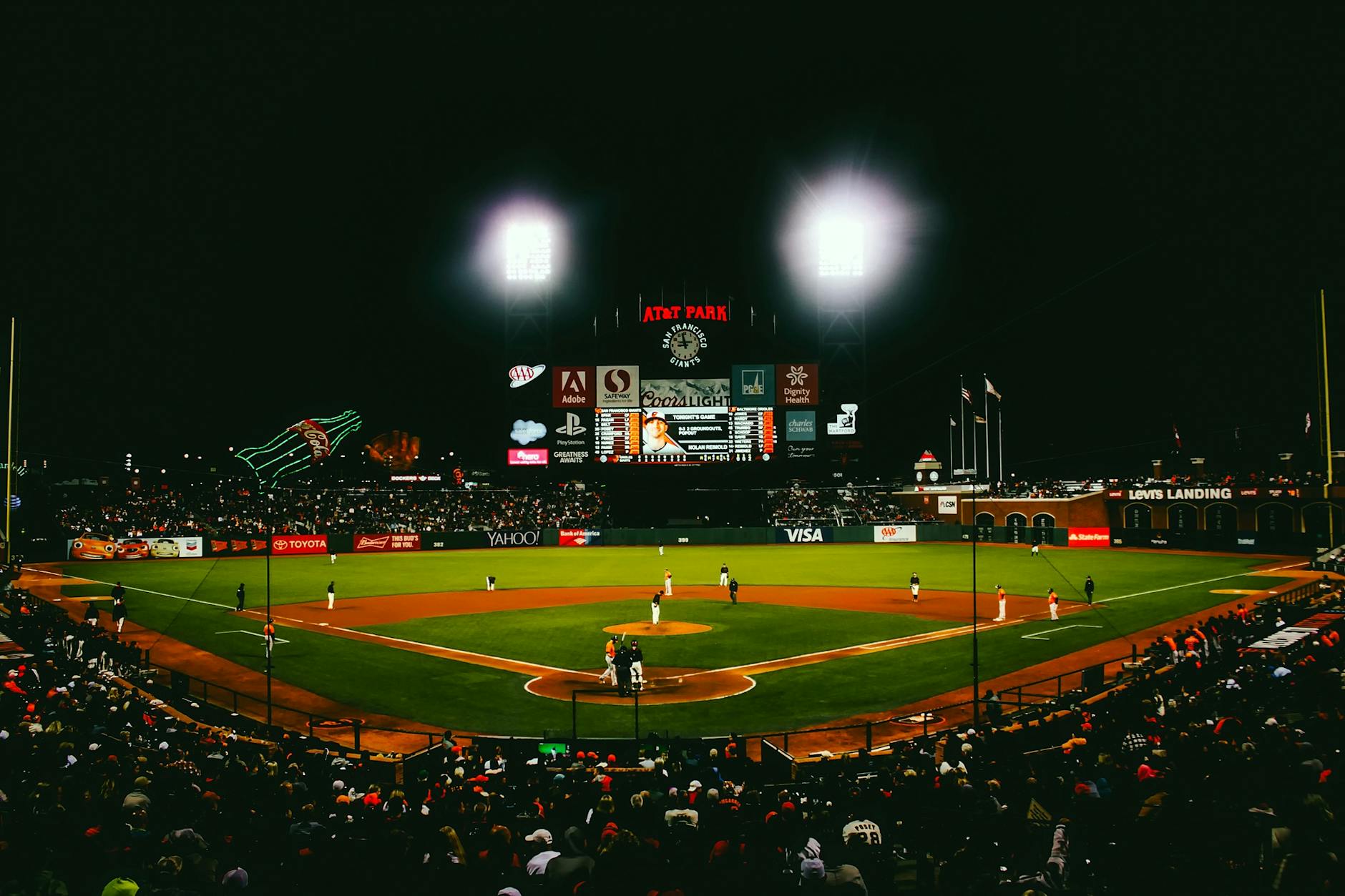
Today's major league scoreboards are connected directly to the official MLB data feed, which tracks every pitch, every baserunner, every lineup change in real time. The information displayed on a screen in left field is the same information being sent simultaneously to television broadcasts, mobile apps, and fantasy sports platforms. There is no lag. There is no operator making a judgment call. The number goes up because a computer put it there, and the computer got it from a sensor system that never blinks.
Wrigley's hand-operated board, one of only two remaining in Major League Baseball, is now a deliberate anachronism — preserved specifically because it connects the park to its own history. The teenagers who once sat inside it are long gone. But the board is still there, still flipping metal plates by hand, still a few seconds behind the actual game.
Which, if you think about it, is exactly how it always worked.