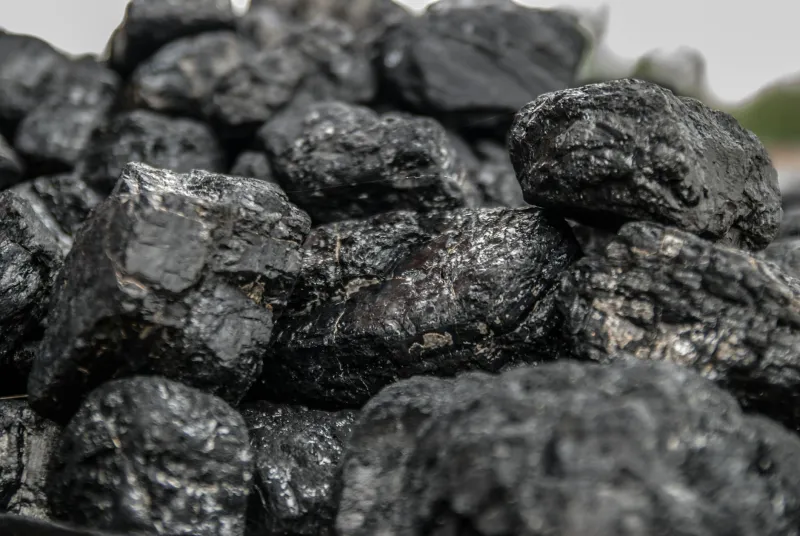
The Recipe Born in Darkness
Three hundred feet below the hills of eastern Pennsylvania, in the suffocating heat of the Centralia coal mines, workers had a problem that would accidentally revolutionize modern athletics. They needed food that could sustain brutal physical labor for 12-hour shifts, but everything they brought underground either spoiled in the heat or crumbled in their lunch pails.
 Photo: Centralia coal mines, via c8.alamy.com
The solution came from the miners' wives, who in the 1880s began baking what they called "shift cakes"—dense, almost indestructible rectangles packed with oats, molasses, nuts, and whatever dried fruit they could afford. These weren't treats; they were survival tools, engineered to deliver maximum calories in minimum space while withstanding the harsh conditions of industrial labor.
No one imagined that these humble coal miner lunches would eventually become the blueprint for a multi-billion-dollar sports nutrition industry.
The Accidental Discovery
In 1923, a University of Pennsylvania track coach named Lawson Robertson was struggling with a common problem: his distance runners were hitting walls during long training sessions. The athletes would start strong but fade dramatically after an hour or two of intense work. Robertson had tried various approaches—more meals, different timing, expensive supplements—but nothing seemed to give his runners sustained energy.
 Photo: University of Pennsylvania, via c8.alamy.com
The breakthrough came through pure chance. Robertson's star miler, Tommy Connolly, was the son of a coal miner from the anthracite regions north of Philadelphia. During a particularly grueling training camp, Connolly's mother sent a care package that included several of her husband's shift cakes, wrapped in wax paper just as they would be for a trip down into the mines.
Connolly shared the dense cakes with his teammates during a long training run. What happened next would change sports nutrition forever: the runners maintained their energy levels far longer than usual, finishing the workout strong instead of struggling through the final miles.
The Underground Formula
Robertson was intrigued enough to visit Connolly's family and learn about the shift cake recipe. What he discovered was a masterclass in practical nutrition that had evolved through decades of trial and error in one of America's most physically demanding industries.
The miners' wives had unknowingly created an ideal endurance fuel. The oats provided complex carbohydrates for sustained energy release. Molasses delivered quick-burning sugars and essential minerals lost through heavy sweating. Nuts added protein and healthy fats for long-term satiation. Dried fruits contributed natural sugars and vitamins that were often lacking in the miners' limited diets.
Just as importantly, the cakes were engineered for durability. They had to survive being carried in metal lunch pails through jarring elevator rides, extreme temperature changes, and the constant vibration of heavy machinery. This accidental requirement for toughness meant the cakes maintained their nutritional value and palatability under exactly the kinds of stress that athletes put on their food during long training sessions.
The Athletic Adaptation
Robertson began experimenting with variations of the shift cake recipe, adjusting ingredients based on what he observed during training. He added more dried fruit when runners needed quick energy bursts. He increased the nut content when they were doing strength-building workouts. He modified the molasses ratio based on weather conditions and sweat rates.
By 1925, Robertson's modified shift cakes had become standard nutrition for Penn's track team. Other coaches noticed the team's improved endurance and began requesting the recipe. Word spread through the tight-knit community of college athletics, and soon track programs across the country were baking their own versions of what had started as coal miner survival food.
The concept expanded beyond track and field. Football teams began using the cakes during two-a-day practices. Rowing crews packed them for long training sessions on the water. Even baseball players started carrying them during spring training.
The Commercial Revolution
For forty years, shift cake derivatives remained a homemade solution passed between coaches and athletes. But in the late 1960s, a California cycling team called the Brentwood Wheelers was looking for portable nutrition during century rides—100-mile training sessions that could last six hours or more.
 Photo: Brentwood Wheelers, via tennesseeaccident.law
Team member Brian Maxwell, a Canadian distance runner studying at UC Berkeley, had learned about the Pennsylvania track tradition and began baking his own version of the old shift cake recipe. But Maxwell, who was studying nutrition science, made systematic improvements based on emerging research about athletic performance and metabolism.
Maxwell's enhanced shift cakes became legendary among Northern California endurance athletes. Cyclists, runners, and triathletes began seeking him out specifically for his homemade energy bars. In 1986, Maxwell and his wife Jennifer decided to commercialize the recipe, founding PowerFood Inc. and launching the PowerBar.
The Billion-Dollar Descendant
The PowerBar was essentially a high-tech version of the 1880s coal miner shift cake, updated with modern nutritional science but based on the same fundamental principles: maximum calories in minimum space, engineered for durability and sustained energy release.
The timing was perfect. The fitness boom of the 1980s had created millions of recreational athletes who needed portable nutrition but had no tradition of homemade athletic food. PowerBars filled that gap, offering the convenience and reliability of the old shift cakes with the marketing appeal of modern sports science.
By 1990, PowerBar was generating $10 million in annual sales. Competitors flooded the market with their own versions of what was essentially the same century-old concept. Today, the energy bar industry generates over $5 billion annually in the United States alone, with dozens of companies selling variations on the basic formula that coal miners' wives perfected in the 1880s.
The Underground Legacy
The modern energy bar aisle at any grocery store is a testament to the ingenuity of working-class women who never imagined their survival recipes would become commercial products. Every PowerBar, Clif Bar, and Kind Bar traces its lineage back to those original shift cakes, baked in coal mining towns to fuel the dangerous work of extracting America's industrial energy.
The next time you unwrap an energy bar before a workout, remember where that dense rectangle of oats, nuts, and dried fruit really came from. It wasn't invented in a laboratory or designed by sports scientists. It was created by necessity in the darkness below Pennsylvania, where survival depended on food that could power human engines through the hardest work in America.
The coal mines are mostly closed now, but their nutritional legacy lives on in every endurance athlete's pocket, still providing the same sustained energy that once powered America's industrial revolution.