The High-Five Is Only About 50 Years Old — Here's the Moment It Was Born
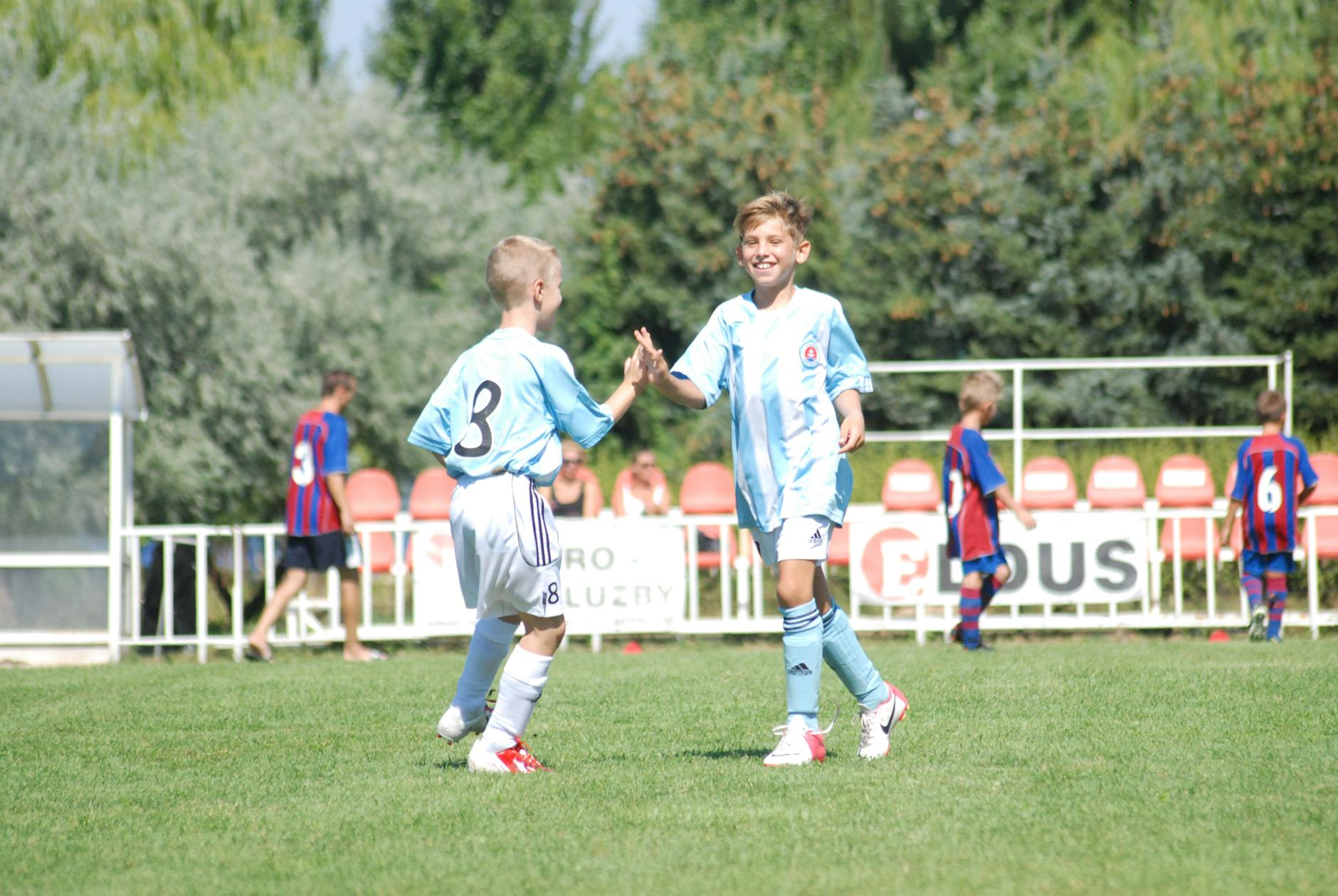
The High-Five Is Only About 50 Years Old — Here's the Moment It Was Born
Think about the last time you threw up a high-five. Maybe it was after a good play at a rec league game, or when a friend nailed a job interview, or just as a casual greeting that felt more energetic than a handshake. It's one of those gestures that seems to exist outside of time — so universal, so instinctive, that trying to imagine a world without it feels almost impossible.
But here's the thing: that world existed, and it wasn't very long ago.
The high-five, by most credible accounts, is roughly 50 years old. It wasn't passed down through generations or borrowed from ancient ritual. It was almost certainly invented in a single, unscripted moment — and there's a surprisingly specific, surprisingly contested story behind it.
October 2, 1977 — Dodger Stadium
The Los Angeles Dodgers are having a remarkable season. Outfielder Dusty Baker has just hit his 30th home run of the year, making the Dodgers the first team in Major League Baseball history to have four players each hit 30 or more home runs in the same season. It's a genuine milestone, and the crowd at Dodger Stadium knows it.
As Baker rounds third base and heads for home plate, his teammate Glenn Burke is waiting in the on-deck circle. Burke is 22 years old, exuberant, and apparently operating on pure instinct. He raises his hand high in the air. Baker, reading the moment, slaps it.
That, according to the most widely cited account, is where it starts.
Burke would later say he didn't plan it. Baker would describe it as spontaneous — a physical expression of a feeling that was too big for a regular handshake. Neither man had a name for what they'd just done. It just happened.
Later that same inning, Burke stepped up to bat and hit his own home run. When he crossed home plate, Baker was waiting — hand raised. They did it again.
The Complicated Life of Glenn Burke
The high-five's origin story can't be told honestly without spending time on Glenn Burke himself, because his life adds layers to the narrative that go well beyond a sports trivia footnote.
Burke was openly gay within the Dodgers organization at a time when that was essentially unthinkable in professional sports. He never publicly came out during his playing career, but it was widely known among teammates and front office staff. Some accounts suggest the Dodgers front office was uncomfortable with his sexuality and eventually traded him to the Oakland A's partly as a result. His career was cut short, and his post-baseball life was marked by hardship — he struggled with poverty and health problems and died of AIDS-related complications in 1995 at the age of 42.
In 1994, he gave an interview to the San Francisco Chronicle in which he said, with characteristic directness: "I invented the high-five." The gay community in San Francisco had already embraced him as a trailblazer, and the high-five had become something of a symbol — a gesture of joy that crossed every social boundary imaginable.
The irony isn't lost on historians: one of the most universally shared gestures in American culture may have been born from a moment of pure, unguarded happiness by a man who was largely pushed out of the sport he loved.
The Louisville Challenger
Not everyone concedes the Dodger Stadium origin without a fight. There's a competing claim, and it comes from college basketball.
Wilder Murray, a player on the University of Louisville women's basketball team, and her teammate Deborah Yow have been cited in some accounts as performing a high-five during a 1978 game — independently of whatever happened in Los Angeles. Murray's family has advocated for her recognition as a co-inventor of the gesture, pointing out that the women's basketball team had incorporated the high-five into their regular celebration style around the same period.
Some sports historians have suggested that the gesture may have emerged in multiple places simultaneously — a cultural idea whose time had simply come, breaking through in different contexts within a narrow window. The late 1970s were a period of shifting social dynamics, loosening formality, and a broader cultural appetite for more expressive, physical communication. Maybe the high-five was inevitable.
But the Dusty Baker and Glenn Burke account remains the most documented, the most specific, and the most frequently cited origin point. It has names, a date, a stadium, and witnesses.
From the Dugout to Everywhere
Once the high-five escaped the baseball diamond, it moved fast. By the early 1980s, it had spread through professional sports broadly — basketball players adopted it with particular enthusiasm, and it became a fixture of celebration culture across the NBA. From there, it crossed into everyday life with remarkable speed.
By the mid-1980s, the high-five was in commercials, in classrooms, in living rooms. It showed up in movies and TV shows as shorthand for enthusiasm, solidarity, and shared success. It required no explanation and no cultural translation. People just understood it.
What made it so contagious? Part of the answer is physical. The high-five occupies a unique space in the spectrum of human contact — it's more enthusiastic than a handshake, less intimate than a hug, and more energetic than a pat on the back. It's public, visible, and immediate. It communicates something that words sometimes can't reach.
It also scales. A high-five between two people feels the same as a high-five between a player and an entire tunnel of teammates. The gesture adapted to context without losing its meaning.
A Gesture That Outlasted Its Moment
Glenn Burke never got rich off the high-five. He never held a patent or collected a royalty. He died before the gesture he helped create became the fully global phenomenon it is today — seen on sports fields, in offices, at graduation ceremonies, between strangers sharing a moment of mutual luck.
But the hidden backstory of the high-five is worth knowing, not just as a piece of sports trivia, but as a reminder of how culture actually works. The things we think of as timeless often have a very specific birthday. They have names attached to them, circumstances behind them, and stories that are richer and stranger than the gesture itself suggests.
Somewhere in Los Angeles, in the fall of 1977, a young outfielder raised his hand on instinct — and accidentally gave the world something it didn't know it needed.