The Machine That Wasn't Ready
December 7, 1963. Philadelphia's Municipal Stadium. The Army-Navy football game, one of the most-watched sporting events of the year. In a cramped CBS production truck, director Tony Verna was sweating over a temperamental piece of equipment that most people thought was still science fiction: a videotape machine capable of playing back footage immediately.
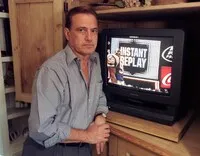 Photo: Tony Verna, via www.washingtonpost.com
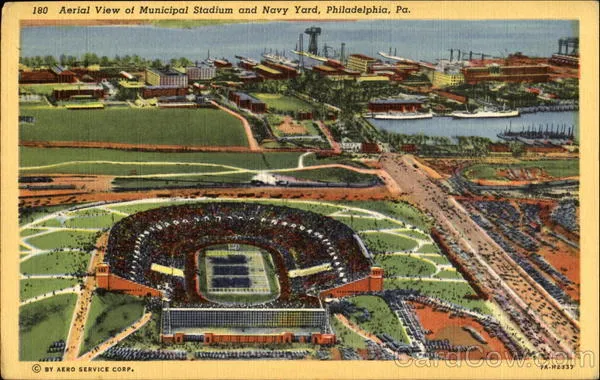 Photo: Philadelphia's Municipal Stadium, via www.cardcow.com
The Ampex HS-100, weighing over 1,300 pounds and held together with what Verna later described as "prayers and electrical tape," wasn't supposed to be ready for live television. It was an experimental prototype that CBS executives had reluctantly allowed Verna to test during the game—with strict instructions not to use it unless absolutely necessary.
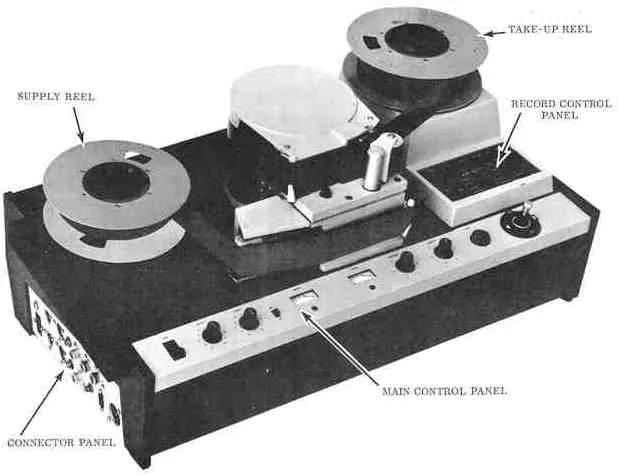 Photo: Ampex HS-100, via labguysworld.com
Verna had no intention of using it. He just wanted to see if the thing would work.
When Everything Went Wrong
Midway through the second quarter, Army quarterback Rollie Stichweh scored a touchdown on a quarterback sneak. It was a crucial play, but it happened so quickly that many viewers missed it. In the truck, Verna was fiddling with the Ampex machine's controls when something went wrong.
The tape mechanism jammed, then suddenly lurched backward. On the monitors, Verna watched the touchdown play in reverse, then forward again. Without thinking—and without asking permission from the control room—he punched the button to send the replayed footage to air.
Viewers across America suddenly saw the same touchdown twice.
The Confusion Heard Round the Nation
CBS's phone lines exploded. Confused viewers were calling to ask if Army had scored twice, if there had been a penalty, if their televisions were broken. The network hadn't announced what they were showing—the technology was so new that they didn't even have terminology for it.
Verna quickly got on the microphone: "Ladies and gentlemen, what you just saw was a videotape replay of the touchdown."
It was the first time those words had ever been spoken on television.
The Accidental Revolution
What Verna didn't realize was that he had just solved television's biggest problem with live sports. For decades, broadcasters had struggled with the fact that crucial plays happened too quickly for viewers to fully appreciate. A spectacular catch, a game-winning shot, a controversial call—blink and you'd miss it.
Suddenly, viewers could see it again. And again. And from different angles.
The response was immediate and overwhelming. CBS received thousands of letters praising the "replay thing." Other networks started demanding their own videotape machines. Within months, instant replay had become standard equipment for every major sporting event.
The Technology Nobody Wanted
The irony is that CBS executives had been skeptical about videotape replay from the beginning. They worried it would confuse viewers, slow down broadcasts, and add unnecessary complexity to live productions. The Ampex machine cost more than most people's houses, required a dedicated technician, and broke down constantly.
Internal CBS memos from 1963, preserved in the company's archives, show executives arguing that "viewers watch sports for the live experience, not to see the same play over and over." They couldn't have been more wrong.
From Sports to Everything
What happened next was unprecedented in media history. A technology accidentally discovered during a football game began migrating into every corner of American life.
News departments started using instant replay to analyze political speeches, looking for inconsistencies or memorable moments. Courtrooms began accepting videotaped evidence, with lawyers using replay techniques to highlight crucial details. Police departments adopted similar technology for training and evidence review.
By 1968, instant replay had become so culturally significant that it was being used metaphorically in everyday conversation. "Let's see that again" became shorthand for wanting to understand something better.
The Unintended Consequences
Instant replay changed how Americans think about truth and accuracy. Before 1963, if you missed something—a play, a speech, a news event—it was gone forever. Your memory was all you had. Suddenly, everything could be reviewed, analyzed, and debated frame by frame.
This had profound implications beyond sports. The Zapruder film of President Kennedy's assassination, analyzed endlessly on television, created a new expectation that important events should be viewable from multiple angles. The concept of "video evidence" entered the legal system. The idea that "the tape doesn't lie" became part of American culture.
The Modern Replay Industrial Complex
Today, instant replay has evolved into something Verna never imagined. Modern NFL broadcasts show the same play from eight different camera angles, in slow motion, with computer-generated graphics overlaying the action. Video review systems can detect whether a ball crossed a goal line by millimeters.
The technology that started with a 1,300-pound tape machine now fits in your pocket. Every smartphone can instantly replay, slow down, and share video clips. Social media platforms are essentially instant replay systems for daily life.
The Glitch That Changed Everything
The most remarkable part of this story is how accidental it was. Tony Verna wasn't trying to revolutionize television—he was just testing equipment. When the machine malfunctioned, he made a split-second decision to air the footage rather than waste it.
That single moment of improvisation during a football game created an entire industry. Video replay systems now generate billions in revenue. Entire TV shows are built around analyzing replayed footage. The phrase "instant replay" has entered the dictionary.
The Philosophy of the Replay
Instant replay fundamentally changed how Americans consume information. We went from a culture that accepted that some things happen too fast to fully understand, to a culture that demands to see everything multiple times, from every angle, in slow motion.
This shift has had consequences far beyond sports. Political debates are now dissected frame by frame. News events are replayed endlessly. We've become a society that believes we can understand complex events by watching them repeatedly.
The Legacy of a Malfunction
The next time you watch a controversial call get overturned by video review, remember: you're witnessing the legacy of a broken tape machine in Philadelphia. A technology that wasn't ready for prime time accidentally became the foundation of modern media consumption.
Tony Verna's accidental broadcast didn't just change sports—it changed how America sees reality itself. Sometimes the most important innovations come not from careful planning, but from equipment breaking down at exactly the right moment.