Before the Alarm Clock, Someone Threw Pebbles at Your Window
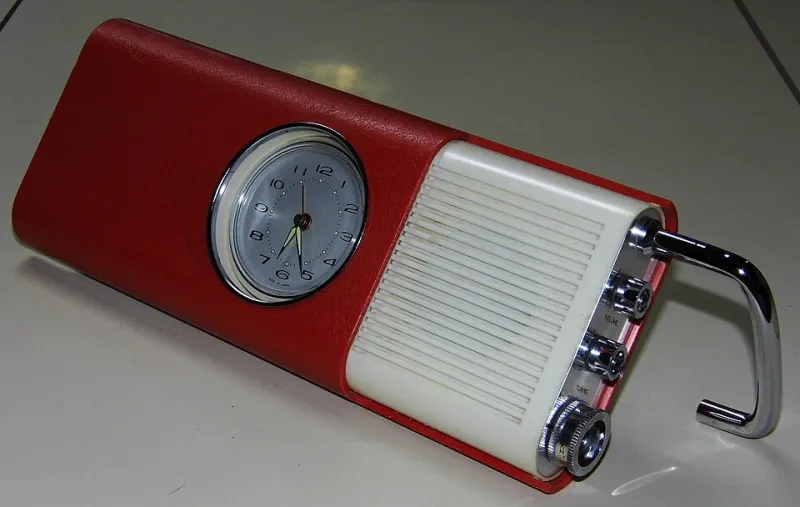
Photo: Joe Haupt from USA, CC BY-SA 2.0, via Wikimedia Commons
Here's a thought experiment: the alarm clock is one of the few devices most of us interact with before we're fully conscious. We trust it to yank us out of sleep, every single day. But the alarm wasn't designed for you. It wasn't designed for rest, or health, or the gentle rhythm of your natural sleep cycle. It was designed for the boss. And the story of how humanity got an alarm — and who was doing the waking before there was one — explains a lot about why mornings feel the way they do.
The Knocker-Upper: Waking Up as a Profession
Go back to the industrial cities of Victorian England — Manchester, Leeds, London — and you'd find a strange figure patrolling the pre-dawn streets carrying a long pole or a bag of dried peas. This was the knocker-upper, a human alarm clock hired by the neighborhood.
The job was simple. Factory schedules didn't care about sunrise, and mechanical timekeeping was expensive; most working families didn't own a clock of any kind. So they paid a knocker-upper a small weekly fee to tap on their bedroom window at the agreed hour — a long stick for upper stories, a pea-shooter or pebbles for the stubborn sleeper. The knocker-upper wouldn't leave until confirmed awake. If you missed the knock, you lost pay. If the knocker-upper overslept, an entire street lost wages.
Which raises the question everyone asks: who woke the knocker-upper? The answer, charmingly, is that knocker-uppers simply stayed up all night, or slept in shifts. It was a night job, not a morning one.
The profession survived in England into the 1970s — a full century of human beings being paid to tap on glass. America, meanwhile, found a louder solution.
The Whistle Was the Alarm
In American mill towns, the wake-up call came from the factory itself. Steam whistles sounded across entire towns at dawn, and the company clock tower set the rhythm of life. This is the crucial detail: the employer controlled when the town woke up. Time wasn't personal — it was institutional.
Mechanical alarm clocks existed as early as the fifteenth century in scattered forms, and Levi Hutchins of New Hampshire built himself one in 1787 — but only for his own use, and only to wake at 4 a.m. for his devotions. He never patented it, and he never intended to sell it. The alarm clock as a consumer product didn't really arrive in America until the 1870s, when clock makers like the Seth E. Thomas company began mass-producing affordable wind-up clocks with bells.
Even then, adoption was slow. Early alarms were loud, unreliable, and — this is the part that matters — expensive relative to wages. For decades, working-class households shared clocks the way they shared beds. One alarm might serve an entire tenement, passed between families or owned by the landlady.
A Device Built for the Timeclock
By the early twentieth century, the alarm clock had become a fixture of American bedrooms, and its purpose was unambiguous: get to work on time. The rise of the punch clock, the factory shift, and the standardized workday made punctuality a moral virtue, and the alarm was the enforcement mechanism sitting on your own nightstand. It was discipline, outsourced to a machine you paid for yourself.
The tension only deepened during World War II. Alarm clock production was halted so factories could focus on the war effort, and by 1944 there was a genuine national crisis — workers showing up late across the country. The government eventually allowed alarm clock manufacturing to resume, and even ran ads reminding citizens that a well-rested, on-time workforce was a patriotic one.
The Snooze Button Tells You Everything
Fast forward to today, and the alarm has gone digital, but the underlying arrangement hasn't changed much. Your phone wakes you because your schedule requires it — not because your body does. The snooze button, invented in 1956, is essentially a formal admission that the alarm's schedule and your sleep are in conflict, with the machine winning nine minutes at a time.
Sleep researchers have spent years pointing out that abrupt waking from deep sleep leaves people groggier than waking naturally, and that consistent sleep and wake times matter more than any gadget. The market has responded with sunrise lamps, smart alarms that track sleep cycles, and apps that promise gentler mornings — all attempts to soften a device that was never really built with the sleeper in mind.
So the next time your alarm goes off, spare a thought for the knocker-uppers with their pea-shooters and the factory whistles that ruled whole towns. We traded a person tapping on our window for a machine screaming on our nightstand, and we've been negotiating with it ever since. The alarm didn't come from a dream about better mornings. It came from a timeclock — and after 150 years, it's still, quietly, working for the schedule.