The Burglar, the Zapper, and the Key Fob: A Short History of Controlling Things From Far Away
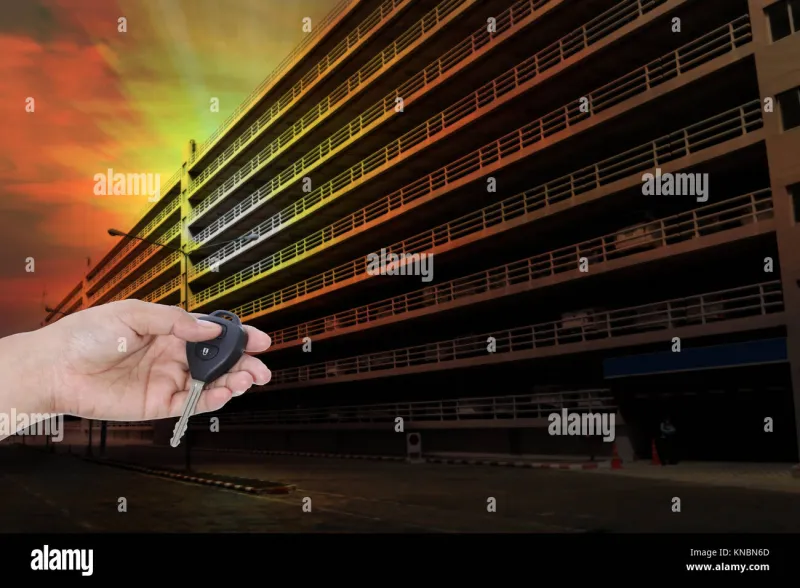
Photo: hand pressing car key fob remote unlock parking lot, via c8.alamy.com
You press a button from fifteen feet away and your car blinks, unlocks, and greets you like a pet. It's such a normal gesture that most of us do it without thinking. But the key fob sits at the end of one of the weirdest family trees in modern technology — a lineage that runs through a burglar alarm, a television remote shaped like a gun, a famous inventor's last great idea, and a patent war that lawyers fought for years. Pull the thread, and the everyday click starts to look remarkable.
It Began With a Man Trying to Keep Burglars Out
The earliest practical ancestor of your key fob wasn't about convenience at all — it was about fear. In the early twentieth century, inventors were experimenting with radio-controlled locks and alarms, devices that could secure a building or a vehicle from a distance. One of the most notable was Edward Samuels, who in 1919 patented a radio-based system for remotely unlocking doors — conceived, fittingly, as a way to defeat burglars and car thieves. The idea of "unlocking something without touching it" existed almost as soon as radio did.
But the technology was bulky, expensive, and unreliable. Radio components in the 1920s filled boxes, not pockets. Remote locking sat on the shelf for decades as a curiosity — an answer waiting for a world that hadn't asked the question yet.
The Garage Door and the TV Zapper
The question finally got asked in postwar America, and it was asked by homeowners. Suburbanization meant garages — detached, cold, raining-on garages — and nobody wanted to get out of the car, heave the door up, and get soaked. The electric garage door opener arrived in the 1920s but only became practical with the postwar boom, and by the 1950s drivers were carrying little radio transmitters clipped to their sun visors. This was the first time millions of ordinary Americans routinely controlled a machine remotely. It felt like magic, and it trained a generation to expect it.
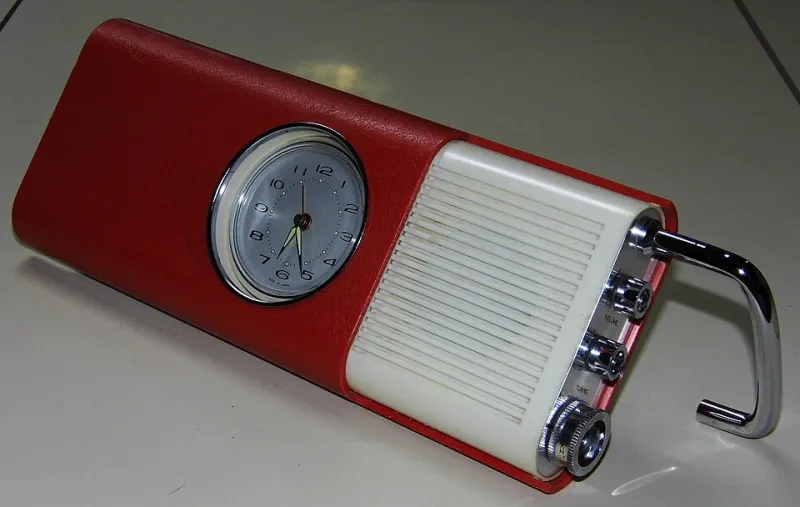
The second breakthrough came from an entirely different room in the house. In 1955, engineer Robert Adler at Zenith was handed a problem: the company's first TV remote, the "Lazy Bones," was tethered to the set by a cable that people kept tripping over. Adler's solution, the 1956 "Space Command," used ultrasonic sound — no wires, no radio. Later versions went infrared, and the TV remote became the most-used remote control in American life. Crucially, it miniaturized the whole concept: batteries, a transmitter, and a single-purpose button, small enough to lose in the couch cushions. Everything needed for a key fob was now sitting in every living room.
The Famous Inventor's Last Idea
Then comes the strangest chapter. In the 1980s, an aging engineer named Paul Keller was working on a problem for a different industry: how to let drivers lock their cars without fumbling for keys in a dark parking lot. Around the same time, separate teams at auto suppliers were racing to do the same thing, and one of the key patents in the field traces back to work involving the inventor's estate — a reminder that in this story, credit is genuinely contested. What's not contested is the timeline: by the late 1980s, luxury cars like certain Cadillac, Corvette, and high-end imports were offering remote keyless entry, and by the mid-1990s it was spreading downmarket fast.
The lawyers got involved almost immediately. Auto suppliers and chip makers filed overlapping patents on everything from the rolling-code security schemes (which prevent thieves from capturing and replaying your unlock signal) to the specific button layouts. Litigation over keyless entry patents dragged through the courts into the 2000s, with juries weighing damages in the hundreds of millions. The fights were a sign of how valuable the feature had become: something nobody had asked for in 1980 was, by 2000, expected on nearly every new car sold in America.
From Luxury to Expectation
Today, remote keyless entry is so universal that its absence feels like a defect. Roughly every new vehicle in the US ships with a fob, and the technology has kept evolving — proximity sensors that unlock the car as you approach, phones replacing fobs entirely, remote start warming up the car from the kitchen. Over a hundred million vehicles on American roads respond to a button press from across the parking lot.
And the lineage is easy to trace once you know it: a 1919 patent born of burglar fear, a 1950s garage transmitter born of rain, a 1956 TV remote born of a tripping hazard, and a 1980s arms race born of luxury-car marketing. None of it was planned. Each piece solved someone else's problem.
So the next time your car flashes its lights in greeting, give a small nod to the strange chain of inconveniences that got you there. The key fob is a hundred-year-old idea that took four unrelated inventions, a few lawsuits, and one very relatable desire — not getting wet in the driveway — to finally click into place.