Borrowed From the Bereaved: How Funeral Parlor Seating Quietly Designed Every Press Conference in America
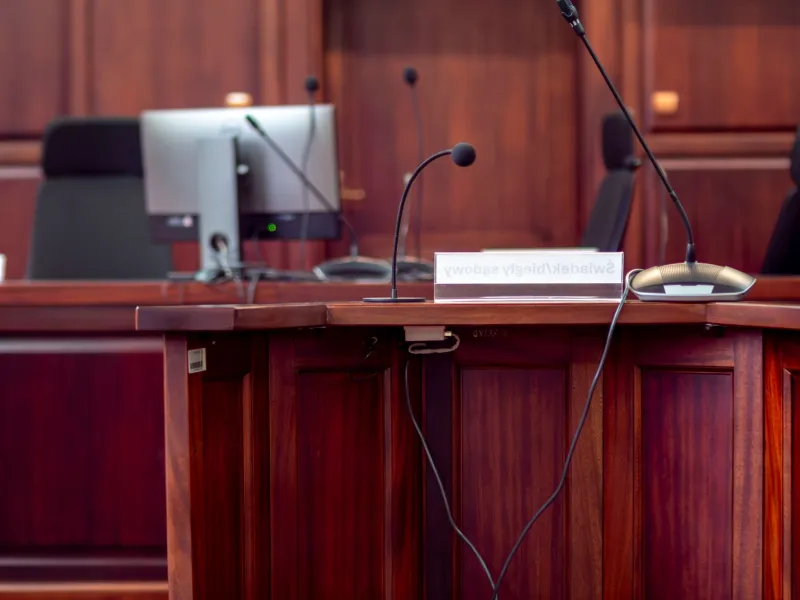
Every time a coach steps up to a podium after a brutal playoff loss, squints into a bank of camera lights, and delivers a measured, carefully worded statement to a room full of strangers with notebooks — you're watching something old. Much older than sports media. Much older than television. You're watching a format that was essentially perfected in funeral parlors.
That's not a metaphor. The structural DNA of the modern press conference — the elevated speaker, the seated rows, the prepared remarks, the brief window for questions — was borrowed almost wholesale from a 19th century American mourning tradition that had nothing to do with athletics.
Before the Podium, There Was No Script
In the early days of professional sports, there was no formal mechanism for athletes or coaches to address the press after a game. Coverage was haphazard. Reporters would linger near dugouts, chase down players in hallways, or simply make things up when quotes weren't available — a practice that was distressingly common in the penny press era. The idea that a team would gather journalists into a room, at a scheduled time, to hear an official account of events hadn't occurred to anyone yet.
That changed gradually through the late 1800s and early 1900s, and the change came from an unlikely source: the civic meeting hall.
American towns in the post-Civil War period had developed a remarkably consistent template for public gatherings involving solemn announcements. Whether it was a church assembly, a political caucus, or a funeral reception, the format was nearly identical. A central figure — a minister, a mayor, a funeral director — would stand at the front of a room. Attendees would sit in organized rows. A statement would be delivered. A short period of acknowledgment or questions would follow. Then everyone would file out.
Funeral homes, which were rapidly professionalizing during this period, became particularly refined practitioners of this format. They needed to gather grieving strangers, deliver information efficiently, manage emotion, and maintain order — all without a script that anyone had formally written down. The room layout itself did the work. Rows of chairs communicated hierarchy and attention. A raised speaker's position communicated authority. The whole arrangement said: someone will speak, everyone else will listen.
The Civic Hall Connection
When early sports organizations began looking for ways to manage press access — partly to control coverage, partly to protect players from the chaos of unstructured reporter scrums — they didn't invent a new format. They borrowed the one that already existed in every American town.
The civic hall press briefing, which had itself absorbed most of its conventions from funeral and memorial gatherings, was already familiar to newspaper editors and team officials alike. It felt authoritative without being aggressive. It was efficient. And crucially, it implied that whatever was being said from the front of the room was the official, considered version of events — not a hallway rumor.
Baseball teams were among the first to formalize post-game access in something resembling a structured session, doing so in the early 1900s. The rooms used were often literally borrowed civic spaces — meeting halls, hotel reception rooms, even church annexes when teams were traveling. The furniture arrangements in those spaces carried the mortuary logic with them.
The Podium as Pulpit
There's a reason the press conference podium looks so much like a church lectern. It basically is one. The physical design of the speaker's platform in American civic life was almost entirely inherited from religious and funeral architecture, where the elevated speaker needed to be visible to a seated crowd and needed to project an air of composed authority while delivering news that was, more often than not, unwelcome.
Coaches delivering post-loss statements are, in a very real sense, performing the same emotional management function as a funeral director addressing a room of mourners. The news is bad. The crowd is upset. The speaker must acknowledge the loss, frame it with some dignity, and provide enough structure that the gathering doesn't dissolve into chaos.
The parallel isn't just structural — it's psychological. Sports teams understood intuitively, long before media training existed as a profession, that the format of the room controlled the tone of the exchange. Put someone behind a podium and they become an authority figure. Seat the audience in rows and they become an attentive audience rather than a mob. The furniture was doing emotional labor.
Why the Format Stuck
By the time television arrived and press conferences became a staple of the sports broadcast cycle, the format was already so deeply embedded that no one questioned it. It simply was what a press conference looked like — because it had always looked that way, borrowed from a tradition of structured public mourning that most people had completely forgotten.
Today, every major sports league has formalized the post-game press conference into a near-ritual. The NBA fines players who skip them. The NFL has specific time windows within which coaches must appear. The format is considered so essential to sports media that its absence reads as disrespect.
None of that infrastructure was designed by sports. It was inherited from grief.
Next time you watch a coach stare blankly into a microphone after a tough loss, looking for the right words in a room that seems specifically designed to make everyone uncomfortable — know that the room was, in fact, designed for exactly that purpose. Just not this kind of loss.