The Referee's Shortcut That Accidentally Gave Every Player a Number
The Referee's Shortcut That Accidentally Gave Every Player a Number
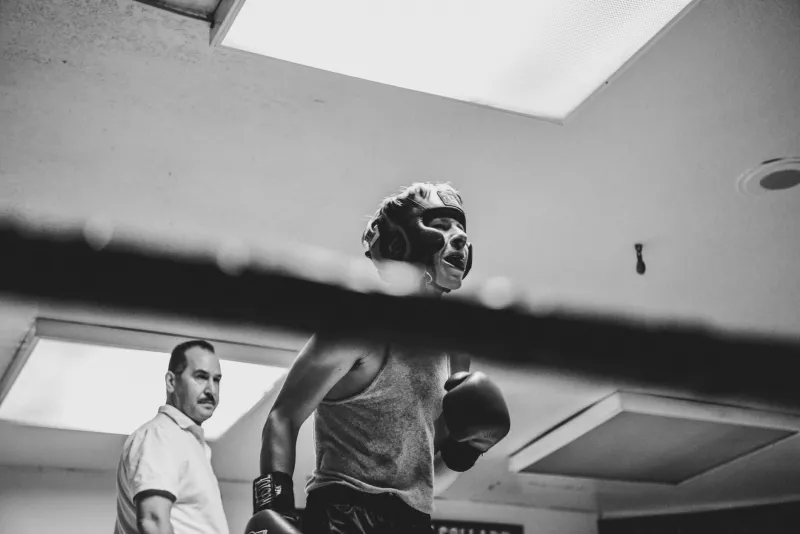
Picture a college gymnasium in 1910. The bleachers are packed, students are stamping their feet on wooden risers, and somewhere in the chaos a referee is trying to report a foul to the scorekeeper on the other side of the court. He cups his hands around his mouth and shouts a player's name. Nobody hears a thing.
That maddening little problem — not innovation, not design, not marketing — is what put numbers on basketball jerseys.
A Game That Grew Faster Than Its Rules
When James Naismith nailed those peach baskets to the gymnasium balcony in Springfield, Massachusetts in 1891, he wrote thirteen rules. Uniform numbers weren't among them. Why would they be? Early basketball was a small-gym, small-crowd affair where everyone more or less knew everyone else. Tracking who fouled whom was about as complicated as keeping score at a backyard pickup game.
 Photo: Springfield, Massachusetts, via c8.alamy.com
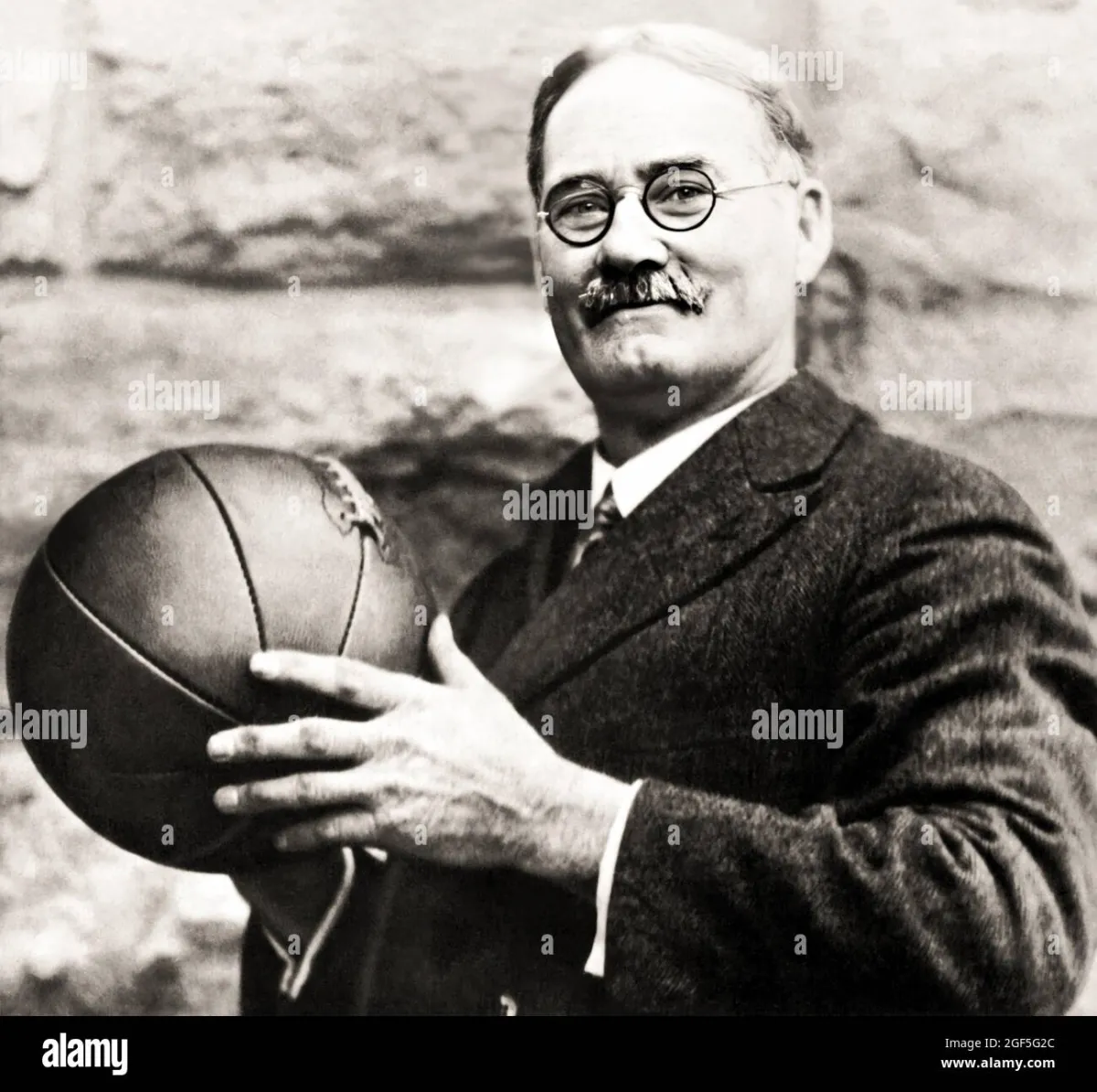 Photo: James Naismith, via c8.alamy.com
But the sport spread fast — faster than its administrative infrastructure could keep up with. By the early 1900s, college programs were drawing genuine crowds, gymnasiums were getting louder, and the gap between the referee standing at mid-court and the scorekeeper hunched over a table near the baseline was becoming a genuine operational headache. Referees needed a reliable way to communicate who had committed a foul without stopping play for extended periods or sprinting across the floor every two minutes.
The solution they landed on was almost embarrassingly simple: hand signals. A referee could hold up fingers to indicate a number, and a scorekeeper could record it without either of them saying a word. Clean, fast, and noise-proof.
There was just one problem. For the system to work, every player on the floor needed to have a number — and that number needed to be visible from across the gym.
The Accidental Mandate
No governing body issued a dramatic decree. No committee convened to debate the aesthetics of numbered uniforms. The practical pressure of the hand-signal system simply made numbering players a necessity, and teams adopted it because the alternative — referees abandoning the signal system and going back to shouting — was worse.
The early numbering conventions were wonderfully chaotic. Some schools used single digits. Others started at ten. A few programs assigned numbers based on roster position, while others handed them out in the order players signed up. There was no universal logic because there had never been a universal plan.
What the hand-signal system did demand, eventually, was a constraint on which numbers referees could actually display with their fingers. You can hold up one hand, two hands, or some combination thereof — but you can't easily flash the number 47 to a scorekeeper thirty feet away in a noisy gym. This practical ceiling pushed the game toward the two-digit number conventions that persisted for decades, where each digit could be shown on a separate hand.
The rule eventually formalized — college basketball would prohibit digits above five on any individual jersey number, precisely because referees needed to be able to represent every digit on one hand. The number 6, for instance, was off-limits for a long stretch of organized play. Not because of tradition. Because of fingers.
From Campus Courts to the Pros
As the college game formalized its numbering system through the 1920s and 1930s, the professional game was watching closely. Early professional basketball leagues were scrappy operations — barnstorming teams, regional circuits, loosely organized competitions that desperately needed anything that looked official and modern. Numbered uniforms, already normalized in college ball, gave professional rosters an air of legitimacy.
The Basketball Association of America, which eventually became the NBA in 1949, inherited a numbering culture already baked into the sport. What it also inherited was the logic behind that culture: numbers weren't decorative. They were functional. They existed so that officials could communicate efficiently with scorers, and so that fans in the upper rows of a sold-out arena could tell who was who without a program.
That fan dimension turned out to matter enormously. Once spectators started associating specific numbers with specific players, something interesting happened. The number became part of the player's identity in a way that a name on the back of a jersey never quite replicated from a distance. You didn't need to read. You just needed to see.
When Numbers Became Mythology
It's worth pausing on how completely the jersey number transformed from administrative convenience into cultural artifact. Bill Russell wore 6. Wilt Chamberlain wore 13. Magic Johnson wore 32. Larry Bird wore 33. Michael Jordan wore 23 — and when he briefly retired and came back, the league refused to let him reclaim it mid-season, so he wore 45 for a stretch that still makes historians wince.
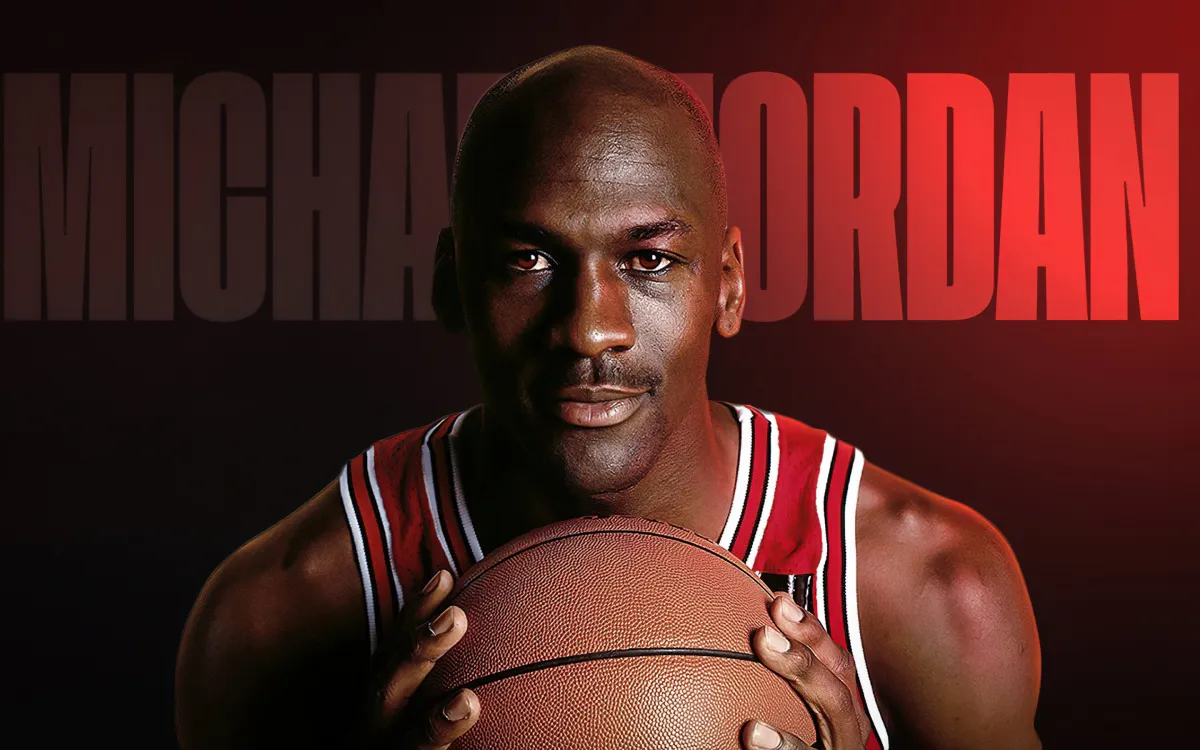 Photo: Michael Jordan, via 4kwallpapers.com
None of that mythology was planned. It accumulated because a referee in a noisy gym once needed a faster way to report fouls.
Retired numbers, which now hang from the rafters of nearly every arena in the country, are a direct descendant of that original communication hack. The number became so associated with a player that removing it from circulation felt like the only appropriate tribute. Teams weren't retiring a numeral. They were retiring a signal — the same kind of signal a referee once flashed across a crowded gymnasium to tell a scorekeeper who just stepped out of bounds.
The Shortcut That Stuck
The hidden backstory of the basketball jersey number is a reminder that the most enduring systems rarely start with vision. They start with frustration. Someone couldn't hear something, someone else needed a workaround, and the workaround outlasted everyone who invented it.
Next time you watch a player point to the number on his chest after a big shot, or see a retired jersey lifted into the rafters while an arena goes quiet, remember the referee standing at half-court in 1910, hands raised, fingers spread, trying to tell somebody something across a room that was just too loud.
He wasn't building a tradition. He was just trying to do his job.