The Silence That Broke Television: How a Radio Engineer's Panic Created the Laugh Track
There's a sound you've heard thousands of times without ever choosing to hear it. It erupts from sitcoms, punctuates punchlines, and fills the space between jokes with a warmth that feels — if you stop and think about it — slightly artificial. It's the canned laugh track, and it has been shaping your sense of what's funny since before most of us were born.
It was not planned. It was not the result of research or creative vision. It was the desperate solution of one man staring into the abyss of dead air, trying to save a broadcast from total embarrassment.
Radio's Uncomfortable Secret
Before television took over American living rooms, radio comedy ruled. And radio comedy had a built-in advantage that was easy to overlook: a live studio audience.
When Jack Benny or Burns and Allen delivered a punchline, real people laughed. That laughter wasn't just feedback — it was part of the experience. It told listeners at home when something was funny, created a sense of communal participation, and gave performers a rhythm to work with. Comedy, it turns out, is deeply social. We laugh harder when we hear other people laughing. We feel more comfortable finding something funny when we're not alone in finding it.
Early television tried to carry that tradition forward. Live studio audiences were standard. The problem was that television introduced complications radio never had to deal with. Camera angles had to be managed. Sets needed to be built. Lighting rigs had to be adjusted. And sometimes — often — the technical demands of a live TV production meant that certain scenes had to be filmed without an audience present, or that the audience's reaction simply didn't come through clearly on the recording.
That gap between what happened in the studio and what came through the television speaker was small. But in comedy, small gaps are canyons.
The Engineer with a Machine and a Problem
Enter Charles Douglass. He was a sound engineer at CBS in the early 1950s, working during the chaotic transitional period when television was still figuring out what it was. Douglass was technically minded, detail-oriented, and deeply familiar with the way audio shaped a viewer's experience.
The specific incident that triggered his invention is somewhat debated in broadcast history — the precise show and date have been told different ways — but the essential story is consistent. A comedy program had aired with sections recorded without a live audience. When those segments played at home, the silence where laughter should have been felt wrong. Not just quiet — wrong. Jokes landed in a void. The pacing collapsed. What had seemed funny in the room felt flat and strange without the social signal of other people responding.
Douglass understood the problem immediately. The audience at home wasn't just watching a performance. They were listening for permission to laugh.
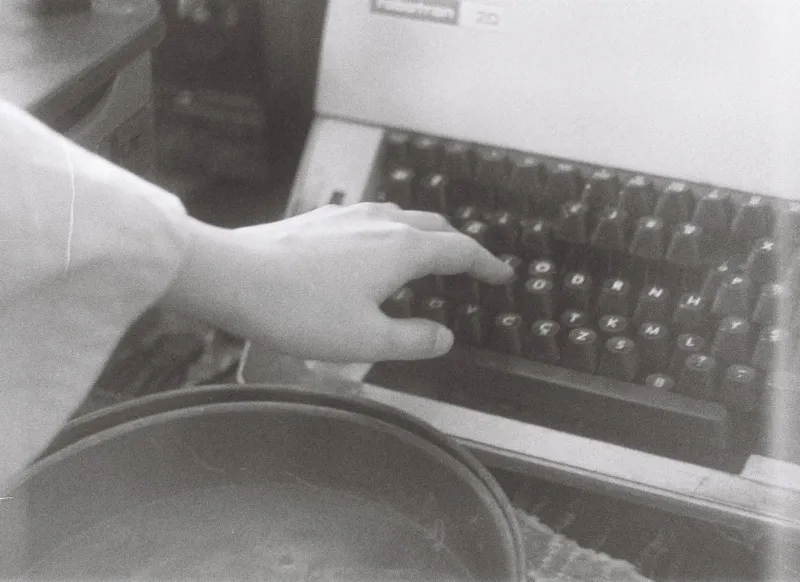
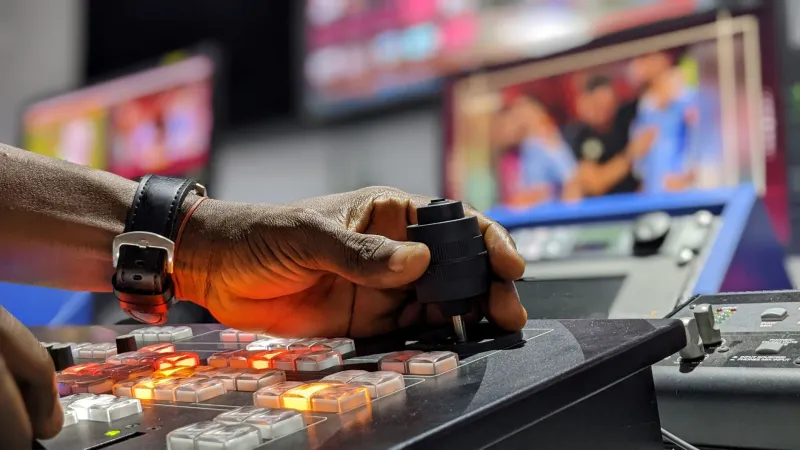
His solution was a device he built himself and quietly called the "laff box" — a machine that stored recordings of genuine audience laughter, categorized by type and intensity, and allowed an operator to play them back in real time during post-production editing. A mild chuckle here. A bigger laugh there. A full roar for the big moment at the end of the act. The operator sat at the machine like a musician at a keyboard, cueing reactions to match the rhythm of the comedy.
The laff box debuted quietly, without announcement. Most viewers had no idea it existed. They just noticed — or rather, didn't notice — that the shows felt more comfortable to watch. The jokes seemed to land. The pacing felt right. Laughter, it turned out, was not just a reaction. It was a structural element of the comedy itself.
The Psychology Behind the Punchline
Douglass's invention worked because it was exploiting something real about human psychology. Research on what's sometimes called "social laughter" has consistently shown that people laugh more frequently and more intensely in group settings than when alone. We use other people's laughter as a cue — a signal that something is genuinely funny and that it's safe to respond. Hearing laughter, even recorded laughter, activates that same social instinct.
A 1974 study published in the Journal of Personality and Social Psychology found that taped laughter increased audience amusement ratings for comedy material, particularly for jokes that were weak or mediocre on their own. The laugh track wasn't just filling silence. In some cases, it was actually making things funnier than they were.
That finding has uncomfortable implications, which is probably why the laugh track has always had a complicated relationship with critics and serious comedy fans. It can prop up material that doesn't deserve propping. It can tell you when to laugh before you've had a chance to decide for yourself. It is, in a very real sense, an emotional instruction embedded in the entertainment.
From Survival Tool to Industry Standard
Once the laff box proved itself, adoption was swift. By the late 1950s, it was standard practice across American television comedy. Douglass held his patents closely and personally oversaw the laughter tracks on hundreds of shows — everything from The Andy Griffith Show to Gilligan's Island to The Brady Bunch. He was, for decades, the man behind the laugh.
His recordings were remarkably consistent in their source material. Some audio historians have noted, with a mixture of awe and slight unease, that much of the laughter Douglass recorded in the early 1950s — from actual studio audiences watching live television — was still being used on shows airing in the 1970s and 1980s. Which means that somewhere in the background of a Diff'rent Strokes rerun, there are people laughing who were almost certainly born before World War II. Some of them may no longer be alive. Their laughter, preserved on tape, outlasted them.
The Backlash and the Legacy
By the 1980s and 1990s, a generation of comedians and showrunners had grown up on laugh-track television and decided they wanted nothing to do with it. The Larry Sanders Show, Seinfeld (which used a live audience but declined artificial augmentation), and eventually The Office and Arrested Development helped establish the single-camera, laugh-track-free format as a mark of sophistication. The absence of canned laughter became its own signal — a way of saying we trust you to find this funny yourself.
And yet the laugh track never fully disappeared. Multi-camera sitcoms — The Big Bang Theory, Mom, Young Sheldon — continued to use live audiences and supplemental audio well into the 21st century, pulling consistent ratings that suggest the format still works for a substantial portion of the American audience.
Charles Douglass died in 2003. His laff box is in the Smithsonian. The laughter he collected and categorized and played back across seven decades of American television is still, in some form, echoing through the culture he helped shape.
All because a broadcast went quiet at the wrong moment, and one engineer refused to let the silence win.