Red Was Never the Safest Choice — So Why Can't We Change It?
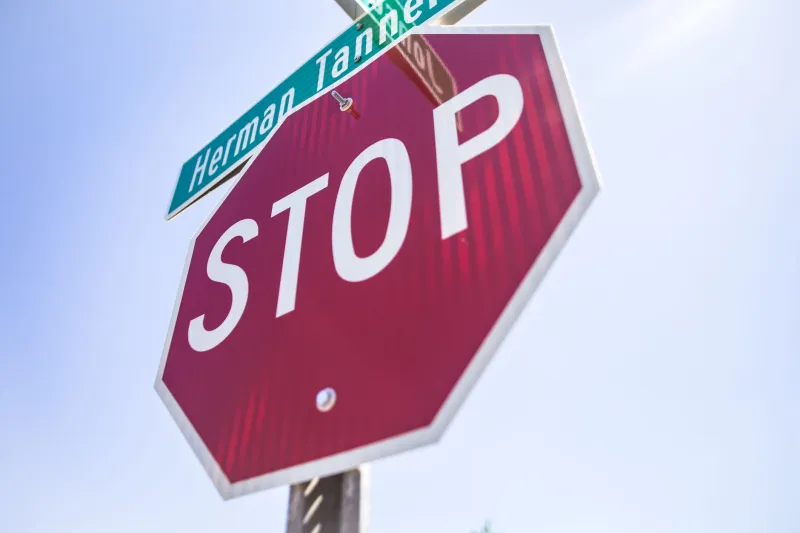
You've stopped at one today. Probably several. The red octagon at the corner is so familiar it barely registers as a conscious decision anymore — your foot just moves. But if you'd asked a traffic engineer in the 1950s whether red was the best choice for a stop sign, you might have gotten a longer, more uncomfortable answer than you expected.
Because the truth is, red wasn't chosen because it was the most visible. It wasn't chosen because science pointed to it. It was chosen largely because of what came before it — and once it was chosen, the infrastructure of an entire country calcified around the decision before anyone had a chance to reconsider.
Before There Were Stop Signs, There Were Railroads
To understand why stop signs are red, you have to go back further than roads. You have to go back to trains.
In the mid-1800s, American railroads developed a color-coded signal system to manage the chaos of locomotives sharing tracks across a growing country. Red meant danger — stop immediately. Green meant caution. White, oddly enough, meant go. That system wasn't the result of deep scientific research. It was largely borrowed from maritime tradition, where red had long been used to signal danger at sea.
The white-for-go arrangement caused problems almost immediately. Train engineers reported mistaking a white star or a clear sky for a signal light, leading to accidents. Railroads eventually shifted green to mean go and yellow to mean caution, but red held its ground. It was already embedded in the minds of every engineer and operator in the country. Changing it felt more dangerous than keeping it.
By the time automobiles started multiplying on American roads in the early 1900s, the people designing traffic systems were the same people — or the intellectual descendants of the same people — who had built railroad signals. Red meant stop. That was simply known.
The First Stop Signs Weren't Even Red
Here's the part that tends to surprise people: the earliest American stop signs weren't red at all.
When the city of Detroit installed what is widely considered the first stop sign in 1915, it was white lettering on a black background. Simple, cheap, legible. Over the next decade, as more cities started adopting traffic signage, there was almost no standardization. Signs varied wildly in color, shape, and size from one town to the next.
The push toward red came partly from railroad logic and partly from a practical problem: early road signs faded fast. White and yellow signs were nearly invisible at dusk. Red, for all its visibility problems in low light, at least carried psychological weight — people already associated it with stopping, thanks to a generation raised around train signals.
The 1920s brought early attempts at national standardization. The Mississippi Valley Association of State Highway Departments recommended red, yellow, and green for traffic signals in 1922, explicitly borrowing the railroad palette. Stop signs followed the same logic. By the time the Manual on Uniform Traffic Control Devices was first published in 1935, red was codified as the standard for stop signs across the country.
The Visibility Problem Nobody Wanted to Fix
Here's what makes this story genuinely strange: almost as soon as red became the standard, researchers started quietly noting its limitations.
Red has relatively poor visibility at night and in low-light conditions compared to fluorescent yellow-green, which reflects significantly more light across a broader range of conditions. Studies conducted throughout the mid-20th century consistently showed that yellow-green was more detectable to drivers at distance and in poor weather. It's why school crossing signs eventually shifted toward that shade. It's why many warning signs in the US use it today.
But stop signs stayed red. Not because engineers were unaware of the alternatives. Because the infrastructure was already everywhere.
By the 1950s, red stop signs were on millions of intersections across the country. Changing them would mean replacing every sign, retraining every driver, and dismantling an association so deeply wired into the American brain that the color red had become functionally synonymous with the word stop. The cost — financial and psychological — was simply too high.
Reflective sheeting technology, introduced widely in the 1940s and refined through the following decades, helped close the visibility gap. Modern stop signs use highly retroreflective red material that performs dramatically better than the flat painted signs of earlier eras. The engineers didn't change the color. They upgraded the color until it was good enough to justify keeping.
Locked In by a Billion Intersections
What the stop sign story really illustrates is something historians of technology call path dependency — the idea that early decisions, even arbitrary or imperfect ones, can lock a system into a particular direction that becomes nearly impossible to reverse.
The railroad industry chose red for reasons that had nothing to do with cars. Early traffic planners borrowed that choice because it was already culturally established. A manufacturing and infrastructure ecosystem grew up around it. And now, more than a century later, every driver in America has stop-equals-red so deeply embedded in their nervous system that altering it would create more danger than it resolved.
The sign itself is almost irrelevant at this point. The real stop sign lives in your head — installed there by a railroad engineer in the 1800s who never imagined a car, let alone a highway.
You stopped at one today without thinking about any of this. That's exactly how it was designed to work.