The Stick of Gum That Came Home From the Trenches
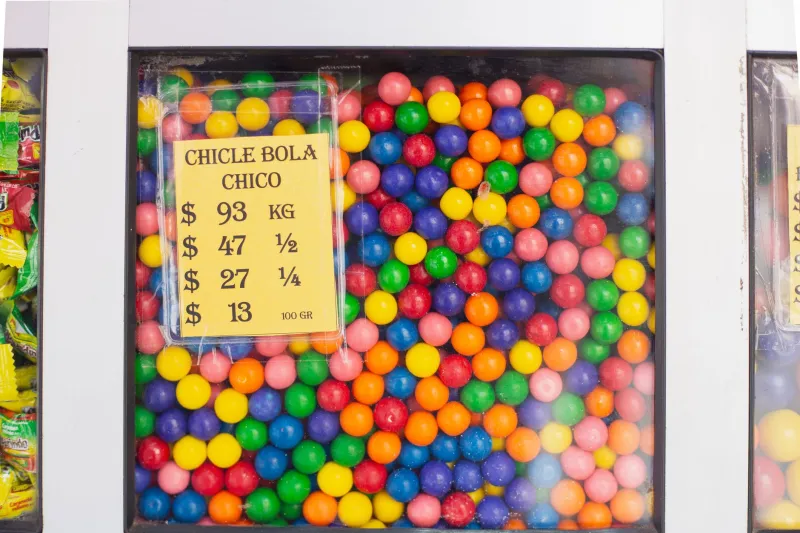
Pick up a pack of gum at any gas station checkout in America and you're participating in a ritual so ordinary it barely registers. A couple of bucks, a foil wrapper, a familiar snap of flavor. It's mundane in the best possible way — one of those small daily habits that just exists, like tying your shoes or checking your phone.
But that habit has a specific origin. And it doesn't start in a boardroom or a candy factory. It starts in a trench somewhere in France, in 1917, with a young soldier who had nothing to do with his hands and nowhere to put his anxiety.
Gum Before the War
Chewing gum existed long before World War I, but it was a niche product with a complicated reputation. Indigenous peoples across North and South America had chewed tree resin for centuries. In the mid-1800s, New York entrepreneur Thomas Adams began experimenting with chicle — a natural latex from the Mexican sapodilla tree — after a business arrangement with the exiled Mexican general Antonio López de Santa Anna went sideways. Santa Anna had brought chicle to the US hoping it could be vulcanized into rubber. It couldn't. But Adams discovered it was satisfying to chew, and by 1871 he had a machine producing the first commercially manufactured gum.
Wrigley's entered the picture in the 1890s, initially giving away gum as a bonus with baking powder before realizing the gum was more popular than the product it came with. By 1900, Juicy Fruit and Spearmint were on shelves.
But gum remained something of a novelty. Etiquette guides warned against chewing in public. Schoolteachers confiscated it. It was associated with a certain restless, lower-class energy that made respectable Americans uncomfortable. Sales were modest. The industry was looking for a reason to grow.
The war provided one.
What Idle Hands Do in a Trench
Modern warfare in 1917 was defined by something that nobody in previous generations of soldiers had experienced quite so intensely: waiting. The Western Front was a stalemate of extraordinary duration. Soldiers spent weeks in trenches, exposed to cold, mud, and constant low-level dread, with long stretches of absolute inactivity punctuated by terrifying bursts of violence.
The psychological toll of that waiting was enormous. Men developed nervous habits — tapping, pacing, obsessive rituals — as a way of managing anxiety without any outlet. Military leadership recognized the problem and began distributing small morale items to keep soldiers occupied and calm. Cigarettes were the most significant of these, but gum was included too.
The US Army began issuing chewing gum as part of field rations in 1917. Wrigley's was among the suppliers. For soldiers who didn't smoke, or who needed something to do during the long hours when lighting a cigarette wasn't practical, gum became a constant companion. The rhythmic, repetitive motion of chewing turned out to be genuinely calming — a physical release valve for nervous energy that had nowhere else to go.
By the time the war ended in 1918, hundreds of thousands of American soldiers had developed a daily gum habit. And they brought it home.
The Industry That Was Ready and Waiting
Wrigley's and its competitors understood exactly what was happening. Returning veterans had normalized gum in a way that years of advertising never could have. The social stigma around public chewing had been quietly dismantled by the image of soldiers — heroes, by definition — doing it constantly.
The 1920s saw a dramatic rebranding of chewing gum's cultural identity. Advertisements shifted from novelty and flavor to something more psychological. Gum was marketed as a tension reliever, a focus aid, a tool for staying sharp during long work days. The wartime experience of soldiers was effectively translated into a civilian pitch: life is stressful, your hands need something to do, gum helps.
Wrigley's ran campaigns targeting office workers, factory employees, and housewives — anyone who might experience the kind of low-grade, sustained stress that trench soldiers had first identified as the product's core use case. Sales exploded through the 1920s and into the Depression era, when the low cost of a pack of gum made it one of the few small luxuries Americans could still afford.
The Science That Showed Up Late
For decades, the calming effect of chewing was just assumed — a folk understanding backed by millions of personal experiences. The science came later and largely confirmed what soldiers had figured out empirically in 1917.
Studies from the 2000s and 2010s found that chewing gum does measurably reduce cortisol levels — the primary stress hormone — and can improve focus and reaction time during cognitively demanding tasks. The repetitive jaw motion appears to activate parts of the brain associated with alertness and emotional regulation. It's a remarkably cheap and accessible form of stress management, which is exactly how the military had used it a century earlier.
Why the Habit Survived Everything
Chewing gum has outlasted nearly every other product from its era. It survived the Depression, two more world wars, the rise of television, the invention of the internet, and a cultural moment in the 2010s when sugar-free everything briefly made people suspicious of any food that didn't have a nutritional purpose.
Gum sales in the US still run into the billions annually. The checkout lane display — the little rack of Trident and Extra and Orbit sitting right where your hands naturally fall while you wait — is a direct descendant of the field ration pouch that some quartermaster loaded onto a supply truck in 1917.
A nervous soldier needed something to do with his hands. A hundred years later, so do you. The stick of gum you grab without thinking is, in its quiet way, the same solution.