Clocking Out for Coffee: The Wartime Ration That Built America's Most Beloved Work Ritual
You've done it so many times you've stopped thinking about it. You push back from your desk, maybe stretch your arms above your head, and wander toward the break room for a cup of coffee. It feels like a basic human right. It basically is — at this point, it's practically written into the unspoken contract of American work life.
But here's the thing nobody tells you: the coffee break wasn't invented by a progressive employer trying to boost morale. It wasn't the result of a labor union negotiation or some enlightened management philosophy. It was invented by a sugar shortage.
Well, sort of. The full story is messier, more accidental, and a whole lot more interesting than that.
Before the Break, There Was Just... Work
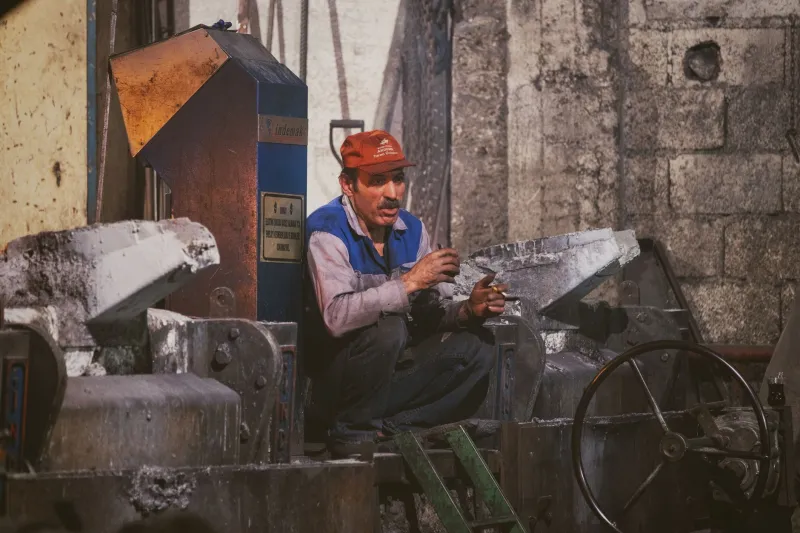
For most of American industrial history, the idea of stopping work to drink something warm would have seemed absurd — maybe even insubordinate. Factory floors in the late 1800s and early 1900s operated on a simple philosophy: you showed up, you worked, you left. Breaks were for lunch, and even those were often rushed affairs squeezed into thirty minutes or less.
Coffee existed at work, sure. Workers brought thermoses. Some drank before their shifts. But the ritualized, company-sanctioned pause in the middle of the workday? That wasn't a thing.
Then World War II happened, and everything got complicated.
The Rationing Problem Nobody Talks About
When the United States entered the war in 1941, the federal government began rationing a long list of goods — rubber, nylon, meat, gasoline. Coffee made the list too. By November 1942, civilian coffee consumption was restricted, and factories suddenly had a logistical headache on their hands.
Here's the specific problem: if you have a thousand workers and a limited coffee supply, you can't let them all crowd the canteen at once. You'll burn through your allocation in twenty minutes and have nothing left for the rest of the shift. Worse, the rush itself becomes a productivity killer — too many people in one place, too much chaos, too much time wasted.
The solution that emerged, quietly and without much fanfare, was staggered breaks. Factories began scheduling workers in rotating groups, sending them to the canteen in waves throughout the day. The coffee supply stretched further. The chaos disappeared. And something unexpected happened: productivity actually went up.
Workers who got a scheduled mid-morning pause came back to their stations more focused. The brief interruption — fifteen minutes, maybe twenty — seemed to reset something in the human brain that hours of repetitive labor had been grinding down.
Lehigh Valley and the Official Stamp of Approval
The story gets a specific anchor point in Steubenville, Ohio, where the Blaw-Knox company — a major industrial manufacturer — began formally scheduling coffee breaks during the war years as a direct response to rationing logistics. But the moment that arguably legitimized the practice for the rest of American industry came in 1952, when the Wage and Hour Division of the U.S. Department of Labor ruled that short rest periods of twenty minutes or less were compensable work time.
In plain English: employers had to pay workers for their coffee breaks. That ruling didn't kill the practice — it cemented it. If you were paying for those fifteen minutes anyway, you might as well make them work for you. Companies leaned in. The coffee break became an official workplace institution.
The Pan-American Coffee Bureau, a trade group representing Latin American coffee exporters, saw an opportunity and ran with it. Their 1952 advertising campaign — "Give Yourself a Coffee Break" — is often credited with popularizing the exact phrase. They weren't inventing a habit; they were branding one that had already taken root.
From Factory Floor to Open-Plan Office
Through the 1950s and 1960s, the coffee break migrated from industrial settings into the white-collar world. Office workers adopted it eagerly. It became a social ritual as much as a physiological one — a moment to gossip, decompress, commiserate, and occasionally solve the actual problems that had been stuck in your head all morning.
Research that followed — some of it decades later — consistently supported what those wartime factory managers had stumbled onto by accident. Short, regular breaks improve concentration. They reduce errors. They prevent the kind of decision fatigue that makes people worse at their jobs as the afternoon drags on. The science caught up to the accident.
Today, the coffee break has evolved into something almost philosophical. Silicon Valley companies turned it into an elaborate ritual — free cold brew on tap, artisanal pour-overs, kombucha for the people who've moved on from caffeine. Remote workers build their entire day around it. Productivity gurus argue about whether you should take breaks every 52 minutes or every 90. The Pomodoro Technique is essentially a formalized coffee break system with a tomato-shaped timer.
The Ritual Nobody Questions
What's remarkable about the coffee break isn't that it exists — it's that it became so deeply embedded in American work culture that nobody ever thought to question it. Workers expect it. Employers assume it. Labor law protects it.
All of that traces back to a wartime supply chain problem that forced some factory managers to get creative with scheduling. There was no grand vision. No labor movement hero demanding rest time. Just a logistical headache and a surprisingly good accidental solution.
So the next time you push back from your desk and head for the break room, know that you're not just getting coffee. You're participating in a ritual that was quietly invented by a sugar and coffee shortage in 1942 — and that nobody has questioned since.
Every ordinary thing has a story. This one just happens to come with caffeine.