The Tiny Pocket That Confused Everybody: A Tailor, a Miner, and the Hidden Logic of Your Jeans
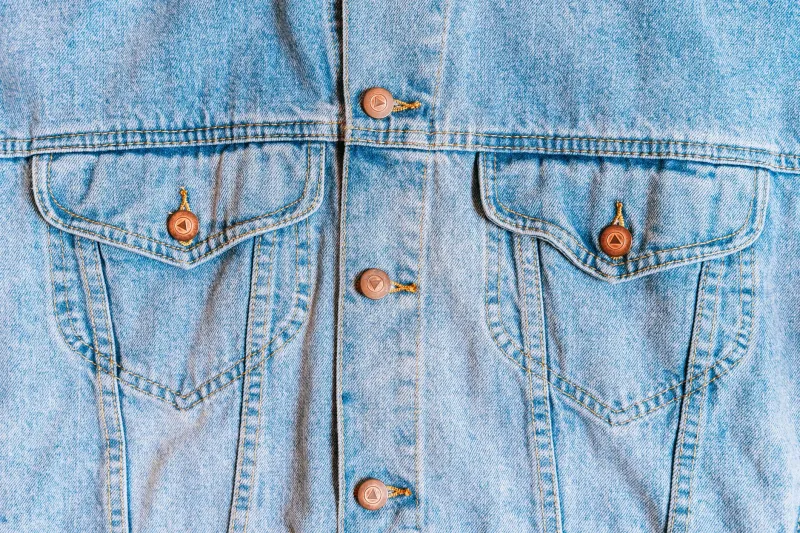
There's a pocket in your jeans that doesn't make sense.
You know the one. It sits nestled inside the right front pocket — too small for your phone, barely big enough for a few quarters, absolutely useless by modern standards. Most people shove a thumb in there occasionally, realize nothing fits, and move on with their lives. Some people didn't even know it was a pocket until this sentence.
Here's the hidden backstory: that pocket has a name, a specific purpose, and a surprisingly dramatic origin. It was designed for a world that no longer exists — and it's been quietly riding along on your jeans ever since.
Denim Before It Was Cool
To understand the tiny pocket, you have to go back to a time when jeans weren't a fashion statement. They weren't something you wore to look effortless or to signal that you were the kind of person who values durability. They were workwear, plain and simple — the kind of clothing you bought because it wouldn't fall apart when you were crawling through a mine shaft.
The California Gold Rush of 1848 created an enormous demand for durable clothing. Men flooded into the Sierra Nevada foothills looking for fortune, and they needed pants that could take punishment. Canvas, duck cloth, and eventually denim became the materials of choice.
Levi Strauss, a Bavarian immigrant who had set up shop in San Francisco as a dry goods merchant, recognized the opportunity. By 1873, he had partnered with a Nevada tailor named Jacob Davis to patent a specific innovation that would define denim forever: metal rivets at the stress points of pockets.
Davis had figured out that the corners of pockets were the first thing to tear on a working man's pants. Rivets fixed that. The patent they filed together on May 20, 1873 is the founding document of blue jeans as we know them.
The Problem With Pocket Watches
But here's where the tiny pocket enters the story.
In the 1870s and 1880s, pocket watches were the dominant personal timekeeping technology. Wristwatches were a novelty, considered somewhat feminine, and wouldn't become mainstream until World War I. Every man who could afford one carried a pocket watch — and the miners, railroad workers, and laborers who wore Levi's jeans were no exception.
The problem was that pocket watches are fragile. The glass crystal on the face scratches easily. The internal mechanisms are sensitive to impact. When you're working a physical job and you're dropping tools, crawling through tight spaces, and constantly moving, a pocket watch rattling around loose in a standard trouser pocket is going to get destroyed.
Jacob Davis's solution was elegant: a small, dedicated pocket, reinforced and positioned just inside the right front pocket, perfectly sized to hold a pocket watch securely. The watch sat snug, protected from the chaos of the work environment, and could be pulled out cleanly without digging through whatever else was in the larger pocket.
Levi Strauss & Co. included this feature in their original riveted waist overalls — the garment we now call jeans. It was called, straightforwardly, the watch pocket.
The Feature That Refused to Die
Here's where the story gets philosophically interesting. The pocket watch faded from everyday life after World War I. Wristwatches took over. By the 1920s, the original purpose of the small pocket had become largely irrelevant to most wearers.
And yet the pocket stayed.
Levi Strauss kept it on the 501, their flagship design, through every decade of the 20th century. Other denim manufacturers copied the feature because Levi's had it. The watch pocket became so associated with jeans that removing it started to feel like removing something essential — even if nobody could quite articulate why it was there.
At various points in the 20th century, the tiny pocket found secondary purposes. Hippies in the 1960s used it for coins. Smokers tucked lighters in there. Cowboys carried matches. In the early days of Zippo lighters, the dimensions of the watch pocket were almost perfectly matched to the lighter's size — probably not a coincidence, given how many working men carried both.
Today, the pocket occasionally holds an AirPod case, a guitar pick, or exactly one folded bill that you forget about for three months and find doing laundry.
The Rivets You Never Notice
While we're here, it's worth pausing on those copper rivets — because they're part of the same origin story and most people have stopped seeing them entirely.
The original Levi's patent was specifically about rivets at pocket corners. Those small copper dots on your jeans aren't decorative. They're the entire reason jeans became jeans. They're what separated a durable work pant from everything else on the market in 1873.
For a while, Levi's also put a rivet on the crotch seam — an area of significant stress in work pants. That one was removed in the 1940s after complaints from workers who sat near open fires or on hot metal surfaces discovered the hard way that copper conducts heat.
Some things get quietly edited out of history. Others hang on forever.
What Your Jeans Remember
The watch pocket is a time capsule. It was designed for a specific worker, solving a specific problem, in a specific era — and it has outlived all three by more than a century.
Every pair of jeans produced by virtually every major denim brand still includes it. Levi's, Wrangler, Lee, and countless others. It's become so standard that its absence would feel like an error.
So next time you absentmindedly poke your thumb into that useless little pocket, remember: you're touching something a 19th-century tailor designed for a Gold Rush miner who needed to check the time without breaking his watch.
That's the hidden backstory. It's been in your pants the whole time.