Before You Blow Out the Candles, Know This: Your Birthday Ritual Is Older Than Christianity
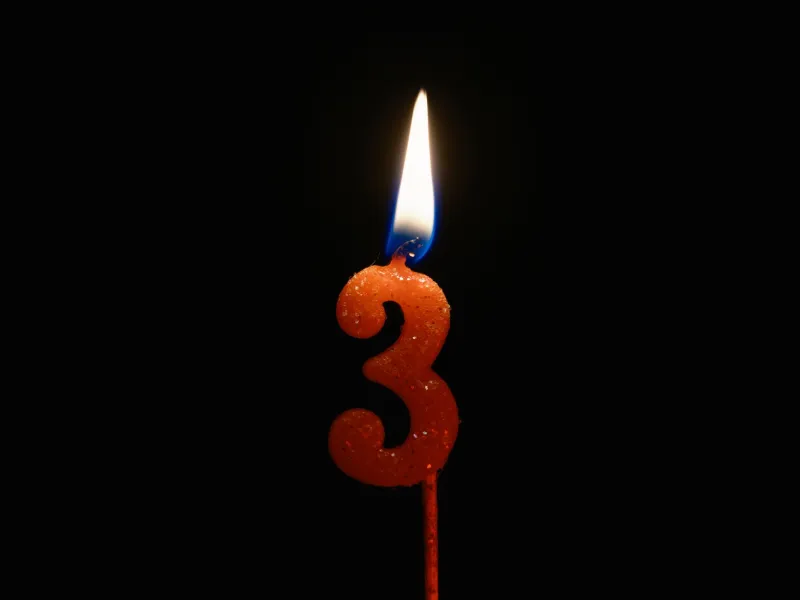
Somewhere in America tonight, someone is standing in a dim room while the people they love sing an awkward song and present them with a cake covered in small burning flames. They'll close their eyes, make a wish, and blow. Everyone will clap.
It's one of the most universal rituals in American life. It happens millions of times a year, in every state, at every income level, across every religious background. And almost nobody who participates in it has any idea where it came from.
The answer is ancient Greece. Specifically, it involves a moon goddess, a temple offering, and a belief system that was already old when Rome was young.
Artemis Gets a Cake
The Greeks were meticulous about their gods. Artemis — goddess of the moon, the hunt, and wild places — was among the most widely worshipped in the ancient world. Her temple at Ephesus was one of the Seven Wonders of the Ancient World. She had festivals, rites, and a particular relationship with moonlight that her worshippers took seriously.
One of the offerings made at her temple involved round cakes, shaped to mirror the full moon, and lit with candles or small torches. The circular shape honored the moon's form. The flames represented the moon's glow — a luminous tribute brought to the goddess in physical form.
The smoke rising from the candles was thought to carry prayers upward to Mount Olympus, where the gods could receive them. This is the oldest known ancestor of the birthday wish: a prayer encoded in smoke, sent skyward when the flames were extinguished.
This wasn't a birthday tradition yet. It was a lunar ritual. But it was carrying the DNA of something that would eventually become deeply personal.
Germany Adds the Birthday
The leap from lunar offering to birthday celebration happens in 18th-century Germany, and the connection is a tradition called Kinderfeste.
German families in the 1700s began marking children's birthdays with a specific ritual: a cake with lit candles, one for each year of the child's life, plus an additional candle representing the hope of the year to come. The candles were kept burning through the day and blown out after the evening meal.
The German practice appears to have absorbed — consciously or not — elements of older European folk traditions that themselves descended from ancient Greek and Roman customs. The idea that flames carry wishes, that smoke conveys prayers, that a lit candle represents a life: these concepts had been circulating through Western culture for centuries, shifting shape as they moved through different religious contexts.
Johann Wolfgang von Goethe, the German writer and polymath, described a birthday celebration with candles in his autobiography — one of the earliest written records of the practice in a clearly personal, birthday-specific context. He was writing about events from the late 1700s, which puts the German tradition firmly in place before it crossed the Atlantic.
Christianity's Complicated Relationship With Birthdays
Here's a wrinkle that makes the story more interesting: for much of Christian history, birthdays weren't really celebrated at all.
Early Christian theologians were suspicious of birthday celebrations, partly because they were associated with pagan practice — exactly the kind of lunar ritual we've been describing. Origen, one of the early Church Fathers, wrote in the 3rd century that only sinners celebrated their own birthdays. The examples he cited were Pharaoh and Herod, neither of whom were models of Christian virtue.
For centuries, the Church emphasized saints' days over birth dates. You celebrated the feast day of your patron saint, not the anniversary of your own arrival into the world. Birthdays were considered a bit self-indulgent, a bit too pagan, a bit too much about the individual rather than God.
And yet the candle tradition survived. It moved through folk culture, through private family practice, through the spaces that official religious doctrine didn't fully control. By the time the Church had softened its position on birthday celebrations — which happened gradually over the medieval period — the candle ritual was already embedded in European popular culture.
Religion didn't kill the pagan flame. It just waited it out.
The American Birthday Industrial Complex
The tradition arrived in America through German immigration, particularly in the 19th century. German-American communities brought their Kinderfeste customs with them, and the birthday cake with candles began spreading into mainstream American culture.
The process accelerated for a few interconnected reasons. The industrial production of refined sugar made elaborate cakes accessible to middle-class families. The development of birthday cards as a commercial product in the late 1800s — itself a story worth telling — created an industry with a financial interest in making birthdays a bigger deal. And the publication of "Happy Birthday to You" in 1893 (originally written as "Good Morning to All" by two sisters from Louisville, Kentucky) gave the ritual its soundtrack.
By the early 20th century, the birthday cake with candles had become so standard in American culture that it stopped feeling like a tradition at all. It just felt like what you do.
What You're Actually Doing When You Make a Wish
The wish itself is the most direct line back to ancient practice. The belief that a candle flame carries a desire upward — that blowing out the candles in a single breath sends your wish to wherever wishes go — is a direct descendant of the Greek belief that smoke rising from a temple offering carried prayers to the gods.
The moon goddess is long gone from the ritual. The temple is gone. The specific theology is gone. But the basic mechanism — flame, breath, wish, smoke — survived more than two thousand years of religious transformation, cultural migration, and commercial reinvention.
Every birthday cake is a small act of cultural archaeology. The candles are older than the cake, older than the song, older than the concept of birthdays as personal celebrations. They're older than most of the religions practiced by the people blowing them out.
So next time you close your eyes and make a wish, know that you're doing something ancient. The Greeks would recognize the gesture. Artemis might even approve.
Happy birthday. Make it count.