The Button That Was Never Supposed to Stay: How a 1950s Design Patch Rewired the American Morning
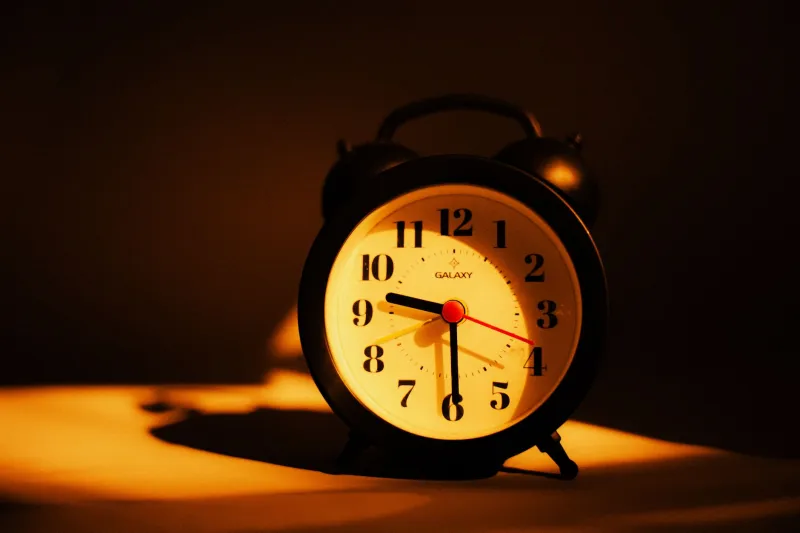
Every morning, somewhere around 6:47 a.m., millions of Americans perform the same small, groggy ritual. An alarm sounds. A hand reaches out from under a blanket. A button is pressed. Nine minutes of borrowed time begins.
The snooze button is so embedded in daily life that it's practically a cultural personality test. Are you a one-snooze person or a serial offender? Do you set your alarm early specifically to snooze it, engineering a false sunrise? Do you feel vaguely guilty about it, like you're stealing something from your future self?
Here's the part that should make you feel better about all of it: the snooze button was never supposed to exist. It was a patch. A workaround. A solution to a mechanical problem that one engineer came up with in a hurry, and that nobody expected to outlast the clock it was installed on.
The Clock That Started It All
In 1956, General Electric–Telechron introduced the Snooz-Alarm, widely credited as the first commercially produced clock with a dedicated snooze function. It was a sleek, mid-century electric clock — the kind of rounded, optimistic design object that looked like it belonged on a nightstand in a Technicolor movie — and it came with a large button on top that would silence the alarm for approximately nine minutes before triggering it again.
The nine-minute interval wasn't chosen for psychological reasons. It wasn't the result of sleep research or human behavior studies. It was a mechanical constraint. The gear configuration inside early electric alarm clocks made it easier to set a delay of just under ten minutes than to hit exactly ten. Nine minutes was what the gears allowed. The engineers went with it, assumed it would be close enough, and moved on.
The feature was marketed as a convenience — a gentle re-entry into wakefulness rather than a jarring single alarm. But the honest origin is more mundane: the mechanism was slightly imprecise, and rather than redesign it, someone decided to make the imprecision a selling point.
Why Nine Minutes Feels Right (Even Though It Isn't)
Here's the strange part. Despite the fact that nine minutes was chosen for purely mechanical reasons, sleep researchers who came along decades later found that it's not entirely arbitrary in its effect.
When an alarm wakes you, you're often in a light stage of sleep — stage one or stage two of the sleep cycle. Falling back into deep sleep (slow-wave sleep or REM) typically takes more than nine minutes. So the snooze interval, accidentally, is short enough that you don't fully re-enter the sleep stages that would make waking up a second time significantly harder.
This doesn't mean snoozing is good for you — most sleep scientists will tell you it fragments sleep in ways that leave you groggier, not more rested, a phenomenon called sleep inertia. But it does mean the nine-minute window has a kind of accidental logic. The engineers who picked it for gear-ratio reasons stumbled onto something that wasn't totally physiologically absurd.
The Button Spreads Before Anyone Questions It
Once General Electric–Telechron put the snooze feature on the market, competitors moved quickly to copy it. By the early 1960s, most major clock manufacturers offered some version of the function. Westclox, Seth Thomas, and others rolled out their own variations, adjusting the interval slightly in some cases but largely standardizing around the nine-minute model because that was what consumers already recognized.
Nobody went back to question whether the feature was actually useful. Nobody ran studies on whether people were sleeping better or worse. The snooze button was a hit with consumers, it differentiated products on store shelves, and that was enough. The accidental workaround became a permanent fixture.
By the time digital clocks arrived in the 1970s and 1980s, the snooze interval could have been anything — digital timers have no gear constraints. Manufacturers could have chosen seven minutes, or twelve, or fifteen. Almost universally, they kept nine. By then, nine minutes felt correct to consumers. It had been nine minutes for twenty years. Changing it would have felt wrong.
The Morning It Created
The snooze button did something that its engineers almost certainly never anticipated: it restructured the American morning.
Before the snooze era, alarm clocks were binary. They rang, you got up. There was no negotiation. The alarm was an authority figure — loud, persistent, non-negotiable. The entire architecture of the morning routine was built around a single wake-up moment.
The snooze button introduced a new temporal space into the morning: the liminal zone between the first alarm and actually getting up. This space, which most snooze users navigate in a semi-conscious haze, is now factored into how people set their alarms, plan their mornings, and think about sleep. People routinely set their alarm thirty or forty minutes before they need to rise, budgeting multiple snooze cycles into their schedule. They are essentially planning to not wake up when their alarm goes off.
This behavioral shift had downstream effects on everything from breakfast habits (rushed or skipped) to morning exercise routines (perpetually postponed) to the entire market for productivity apps and sleep trackers, which exist largely to help people undo the fractured mornings that the snooze button created.
The Accidental Legacy
The engineer who designed that first snooze mechanism — working around a gear problem on a mid-century electric clock — almost certainly never thought about any of this. They were solving a production issue, not designing a cultural institution.
But that's how a lot of the things we live with every day actually got here. Not through grand vision or deliberate planning, but through small fixes that stuck, features that copied themselves across industries, and consumer behaviors that calcified around whatever happened to ship first.
Your alarm is going off. You have nine minutes. That's not science, and it's not wisdom. It's just what the gears allowed.