Nailed It: The Backyard Plank That Nobody Wanted and Everybody Rides
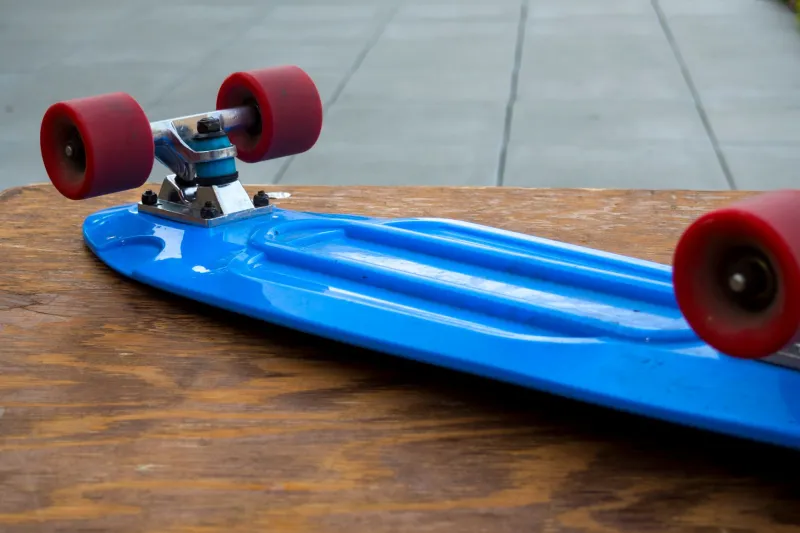
Somewhere in a California garage around 1958, a guy looked at a plank of wood and a pair of busted roller skates and thought: close enough. It wasn't a eureka moment. It wasn't even a good idea, according to everyone he told about it. It was a fix for a very specific and very minor problem — what do surfers do when the ocean goes flat? — and it almost died in that garage before it ever touched a sidewalk.
The fact that it didn't is one of the stranger accidents in American sporting history.
Surf's Down
The Southern California surf scene in the late 1950s ran entirely on the mercy of the Pacific. When the waves came, life was good. When they didn't, surfers were left standing on the beach with nothing to do and restless energy they had absolutely nowhere to put.
Bill Richards, who ran Val Surf in North Hollywood, understood this problem intimately. His customers weren't buying boards when the water was calm — which meant slow weeks, bored regulars, and a shop that sat quiet. His solution was brutally simple: take a two-by-four, strip the trucks off a pair of standard metal roller skates, nail them to the board's underside, and hand it to a surfer. Call it sidewalk surfing. See what happens.
What happened was that people loved it immediately and completely.
Richards started selling the makeshift boards out of his shop. Chicago Roller Skate Company supplied the wheels. The product worked, the demand was real, and Richards figured the logical next step was to find a manufacturer willing to scale it up properly.
That's where things got complicated.
Every Door Closed
The toy and sporting goods industry of the early 1960s had a simple test for new products: could someone get hurt? Skateboards failed that test spectacularly. The metal wheels were essentially uncontrollable on anything except perfectly smooth pavement. Riders fell constantly. There was no steering to speak of. Liability lawyers looked at early skateboard prototypes the way they might look at a loaded weapon sold to a twelve-year-old.
Manufacturer after manufacturer passed. The product was too dangerous, too niche, too weird. One company reportedly told a pitch meeting that nobody wanted to fall off a piece of wood for fun.
They were wrong, but it took a while to prove it.
The first commercial skateboards — produced in small quantities by Makaha in 1963 — sold around fifty thousand units in the first year. By 1965, an estimated fifty million skateboards were in American homes. The industry had gone from zero to a frenzy in roughly eighteen months, with no marketing budget and no celebrity endorsement. Just kids, driveways, and a product that felt like freedom.
Then, almost as fast as it exploded, it collapsed. The metal wheels were genuinely dangerous. Cities started banning skateboarding on public streets. Stores pulled inventory. By 1966, the first skateboard boom was effectively over.
The Underground Years
What saved skateboarding wasn't a business decision. It was a materials breakthrough.
In 1972, Frank Nasworthy introduced urethane wheels — the soft, grippy, shock-absorbing alternative to the metal death discs that had been snapping ankles for a decade. The difference was immediate and total. Riders could actually control the board. They could carve turns. They could push the thing to speeds that felt exciting rather than just terrifying.
A second boom followed, bigger than the first, and this one had something the original lacked: genuine athletic ambition. Skaters weren't just rolling down hills anymore. They were doing tricks, inventing vocabulary — ollies, kickflips, grinds — that had no equivalent in any other sport. They were doing it in empty swimming pools drained during the 1976 California drought, discovering that curved concrete surfaces could become launching ramps if you hit them fast enough.
The authorities hated it. Cities doubled down on bans. Skate parks opened and then closed, crushed by insurance costs that would have been familiar to every manufacturer who'd turned down Bill Richards fifteen years earlier. The liability problem never fully went away.
So skateboarding went underground — literally and figuratively. Skaters moved into drainage ditches, abandoned lots, and the concrete underbellies of highway overpasses. The ban didn't kill the culture. It defined it. Skateboarding became the sport you did because someone told you not to.
One Broadcast Changed Everything
By the mid-1990s, skateboarding had a devoted global following and almost no mainstream visibility. It existed in its own universe — zines, VHS tapes, word of mouth — invisible to anyone who wasn't already inside it.
Then ESPN launched the X Games in 1995, and everything shifted in a single televised afternoon.
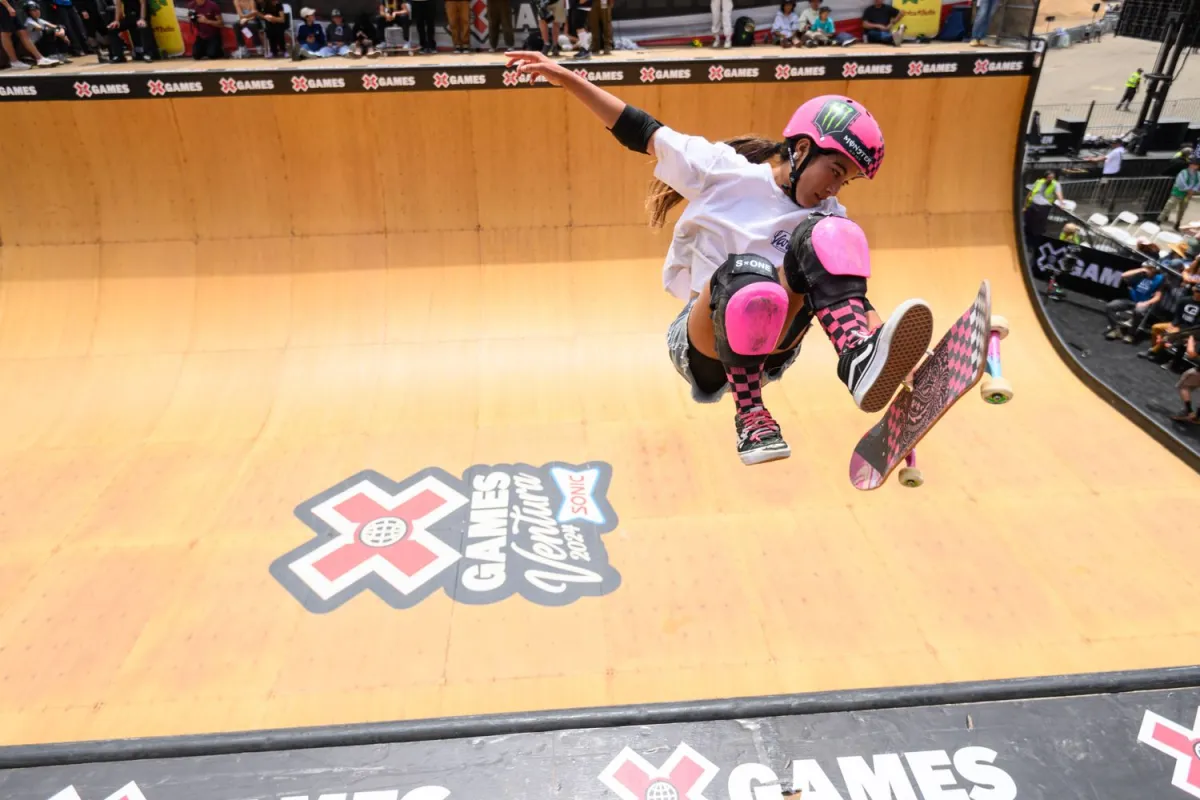 Photo: X Games, via cdn.sanity.io
The X Games didn't invent skateboarding's tricks or its culture. But it gave the sport a broadcast window, a competition format, and a moment when a mainstream American audience watched Tony Hawk do something on a skateboard and understood for the first time that what they were seeing was genuinely extraordinary athleticism. When Hawk landed the first-ever televised 900 — two and a half aerial rotations — at the 1999 X Games Best Trick competition, the clip circulated for years before social media even existed to carry it. People passed it around on burned DVDs and early internet forums like it was contraband.
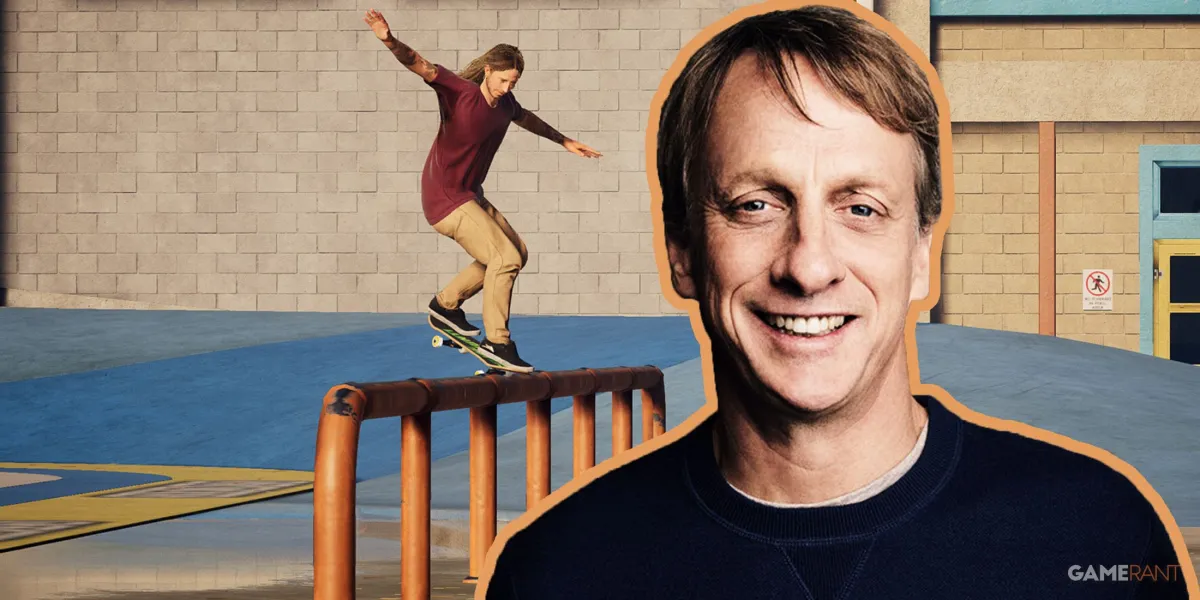 Photo: Tony Hawk, via static0.gamerantimages.com
The industry that had refused to insure a plank of wood in 1960 was worth over a billion dollars by 2000.
What the Plank Left Behind
Skateboarding entered the Olympics in Tokyo in 2021 — sixty-three years after a surf shop owner nailed roller skate trucks to a two-by-four to solve a flat-water afternoon. The athletes competing for gold were doing tricks that didn't have names yet when Bill Richards made his first sales call.
The object itself barely changed. Four wheels, a deck, two trucks. The physics are the same ones those early California kids were working out in drainage ditches. What changed was everything around it — the culture, the money, the mainstream acceptance that took decades to arrive.
Skateboarding's origin story is really a story about persistence in the face of rejection, and about what happens when a product finds its audience before it finds its industry. Nobody wanted to manufacture it. Nobody wanted to insure it. Cities banned it. The sport grew anyway, in empty pools and concrete tunnels, carried entirely by the people who loved it.
The plank won in the end. It just took sixty years to get the paperwork sorted.