Before Branding, Before Fandom: The Laundry Crisis That Put Numbers on Athletes
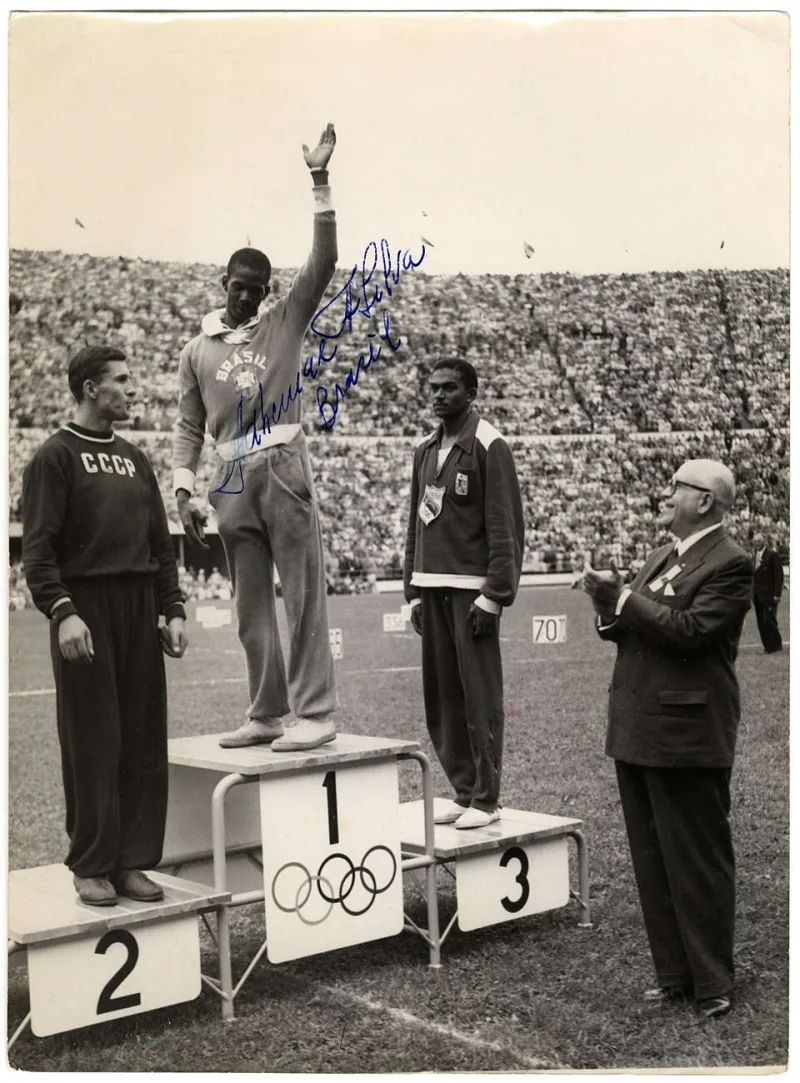
Photo: Unknown authorUnknown author, Public domain, via Wikimedia Commons
There is a version of this story that involves a celebrity athlete, a packed stadium, and a licensing deal worth hundreds of millions of dollars. But that version starts near the end. The actual beginning involves a pile of wet laundry, a very stressed meet official, and the unglamorous logistics of running a large athletic competition before the age of computers, barcodes, or any reliable system for keeping track of whose shorts were whose.
The numbered jersey is so fundamental to American sports culture that it barely seems like something that needed to be invented. Of course athletes have numbers. How else would you know who's who? But that instinct — the sense that numbers are obviously the right solution — is exactly what makes the origin story easy to overlook. The numbers weren't designed for fans. They weren't designed for broadcasters. They weren't designed for the merchandise market that would eventually make them worth more than most Americans earn in a year. They were designed to solve an administrative headache that almost nobody remembers.
The Scale Problem at Early Olympics
The modern Olympic Games were revived in 1896, and from the beginning, organizers faced a logistical challenge that doesn't get much attention in the official histories: managing the physical belongings of hundreds of athletes competing across dozens of events over multiple days.
 Photo: Olympic Games, via cdn.modernghana.com
This sounds trivial until you think through what it actually involved. Athletes in the early Games — particularly in track and field, swimming, and gymnastics — changed clothing multiple times across a competition. Garments were collected, cleaned, and returned. In the era before synthetic fabrics, athletic wear was made of wool and cotton that required real laundering, and in the damp, active environment of an athletic competition, it needed to be cleaned regularly.
With hundreds of competitors, many of whom spoke different languages and came from countries whose naming conventions were unfamiliar to the largely European administrative staff, identifying which garment belonged to which athlete was a genuine operational problem. A pile of white cotton athletic shirts, separated from their owners and mixed together in a laundry facility, was almost indistinguishable from another pile of white cotton athletic shirts.
Meet officials needed a system. And the simplest system available — one that required no shared language and no complex record-keeping — was a number.
How the System Took Shape
The earliest documented use of competitor numbers at major athletic events appears in the late 1800s and early 1900s, in both Olympic and pre-Olympic international competitions. The numbers were typically assigned by officials before events began and served primarily as administrative identifiers — a way to link a person to a record, a garment to an owner, a performance to a name.
They were sewn onto clothing or pinned to it, and they appeared on the documents that officials used to track results. They were not, initially, displayed prominently for spectator benefit. The crowds at early Olympic events were not large enough or sports-literate enough to require the kind of real-time player identification that numbers would later provide. The numbers faced inward, toward the administrative system, not outward toward an audience.
What changed the orientation of that system — from internal logistics tool to public-facing identifier — was the growth of spectator sports in the United States during the early twentieth century.
Baseball Makes the Number Visible
American professional baseball is typically credited with the first consistent use of visible uniform numbers in the late 1920s. The New York Yankees introduced permanent player numbers in 1929, famously assigned in batting order — which is why Babe Ruth wore number 3 and Lou Gehrig wore number 4. Other teams followed within a few years, and by the mid-1930s, numbered uniforms were standard across Major League Baseball.
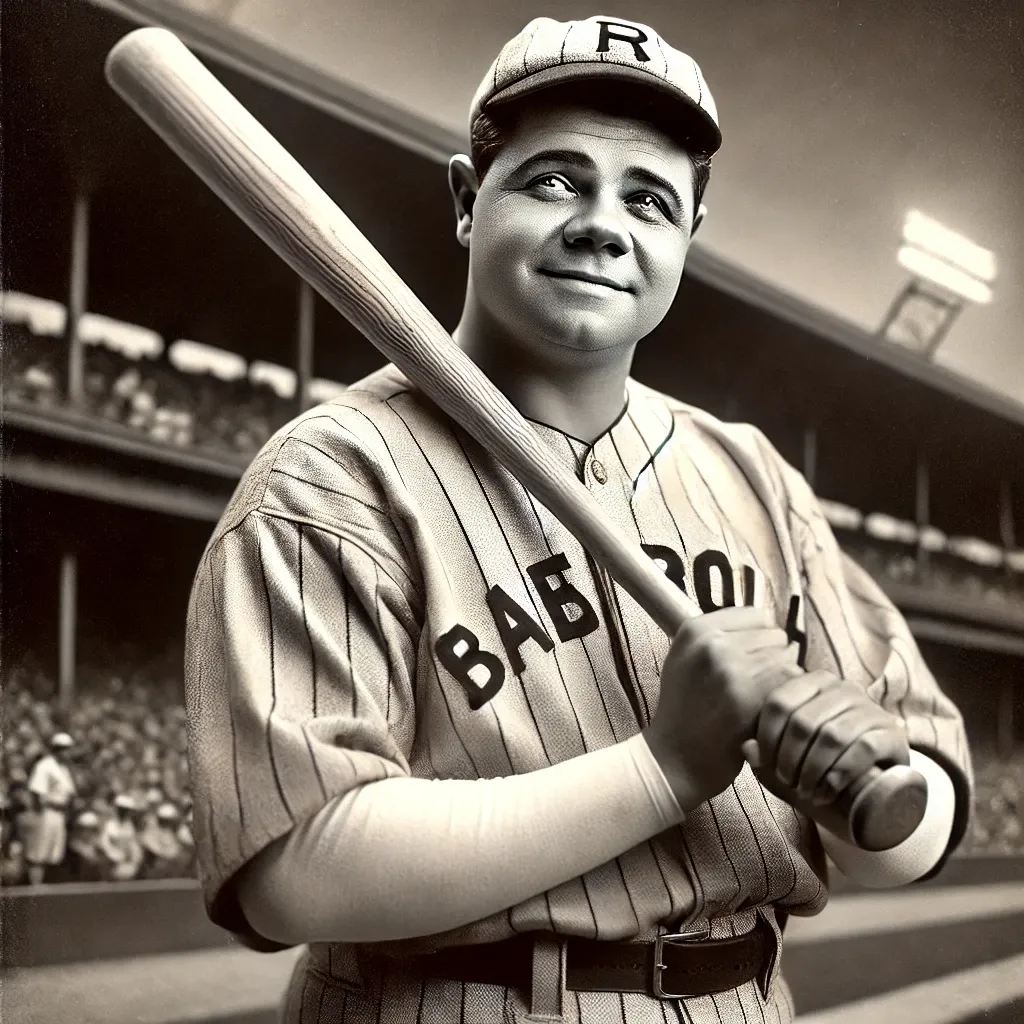 Photo: Babe Ruth, via historicbaseball.com
 Photo: New York Yankees, via logos-world.net
But the Yankees didn't invent the number — they borrowed the concept from the identification systems that had already been in use at amateur and Olympic competitions for decades. What they did was flip the logic: instead of a number that existed to help officials manage logistics, the Yankees created a number that existed to help fans identify players from the bleachers.
That reorientation — from administrative tool to fan experience — was the conceptual leap that made everything else possible. Once the number faced the crowd instead of the filing cabinet, it became something entirely different. It became identity.
From Identity to Industry
The commercial trajectory from numbered jersey to licensed merchandise empire moved faster than almost anyone in the early days of numbered uniforms could have anticipated. By the 1950s and 1960s, replica jerseys were being sold to fans who wanted to wear their favorite player's number. By the 1980s, the market for licensed sports apparel had become a serious revenue stream for major professional leagues. By the 2000s, it was a multi-billion dollar global industry.
A single jersey — say, a replica of a star quarterback's road uniform — might retail for over $150 today. Leagues earn licensing fees on every one sold. Players negotiate name-and-number rights into their contracts. The number on the back of a jersey can be worth more, commercially, than the name above it in some markets.
All of that value traces back to a small cloth tag with a digit on it, sewn into the collar of a wool athletic shirt at a track meet, so that a laundry worker in the early 1900s could figure out whose shirt it was.
The Thing That Outlasted Its Reason
What's quietly fascinating about the jersey number is that it completely outlived the problem it was created to solve. Nobody is sorting wet athletic garments by hand at an NFL game. The logistical challenge that produced the number disappeared decades ago, replaced by computers, bar codes, and modern inventory systems that make hand-numbering obsolete.
But the number stayed — because by the time the original problem was solved, the number had accumulated so much cultural weight that removing it was unthinkable. It had become the soul of a uniform, the shorthand for a player's identity, the thing fans painted on their faces and screamed from the upper deck.
The laundry problem is long gone. The number it left behind is worth billions.