Horse Thieves and Hundredths of a Second: The Gambling Debt Behind Every Race Clock
The next time you watch a swim meet and the scoreboard flashes a time like 47.52 seconds, take a moment to appreciate what you're actually looking at. That number represents a level of precision that required centuries of engineering to achieve — precision so fine that it can distinguish between two human beings who crossed a finish line in what appears, to the naked eye, to be the exact same moment.
Now here's the part nobody mentions in the sports broadcast: that technology didn't come from athletics. It came from horse racing. And horse racing got it because rich men were losing money in arguments they couldn't settle.
When a Second Was Close Enough
For most of human history, timekeeping was a rough business. Sundials, water clocks, and early mechanical clocks were useful for organizing days and scheduling events, but they weren't built for precision. A clock that was accurate to within a few minutes per day was considered excellent. A clock that could measure intervals shorter than a minute was an engineering curiosity rather than a practical tool.
This didn't matter much for most activities. It mattered enormously for horse racing.
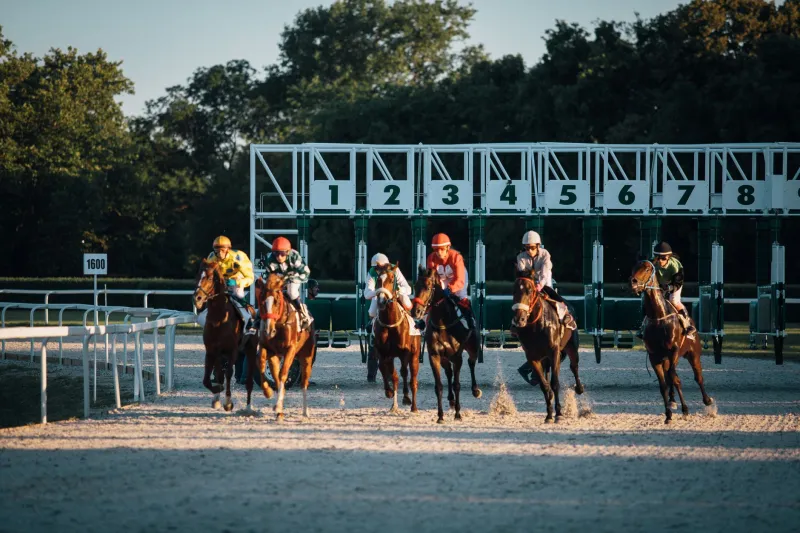
By the 17th and 18th centuries, horse racing had become one of the most financially significant activities in European aristocratic culture — particularly in England, where the sport was practically a parallel economy among the nobility. Massive sums changed hands on race outcomes. Breeding decisions worth fortunes were made based on performance records. And as the stakes grew, so did the disputes.
The specific problem was comparison. Two horses might run at different tracks, on different days, in different conditions. Which one was faster? Without reliable time measurements, the only answer was opinion — and opinion, when large amounts of money are involved, has a way of becoming very expensive.
The Clockmakers Get Involved
The demand for more precise race timing drove a series of incremental clockmaking innovations through the 18th century. Watchmakers began experimenting with mechanisms that could measure fractions of a minute — first quarter-minutes, then individual seconds, then fractions of seconds.
The key breakthrough was the development of the "split-seconds" mechanism, which allowed a timer to measure elapsed time without stopping the clock's main movement. A watchmaker could start the clock when the race began, freeze a secondary hand at the moment a horse crossed the line, record the time, then release that hand to continue tracking without disrupting the measurement. This made it possible to time multiple horses in the same race independently.
By the early 19th century, dedicated racing timers — the direct ancestors of the modern stopwatch — were being manufactured specifically for the horse racing industry. They were expensive, hand-crafted instruments owned primarily by wealthy patrons and official race stewards. They were not yet accurate to the second with total reliability, but they were close. And "close" was already a revolution compared to what had come before.
The Aristocratic Argument That Demanded More
Precision to the nearest second was good. It wasn't good enough.
Horse races were often decided by margins that a one-second instrument couldn't capture. Two horses finishing within a second of each other — a common occurrence — couldn't be reliably separated by existing technology. Disputes continued. Bets remained contested. And the gamblers, who were also the primary customers of the clockmaking industry, wanted answers.
This pressure pushed clockmakers toward the tenth-of-a-second barrier through the mid-19th century. The engineering challenges were significant. A mechanism accurate to a tenth of a second required a balance wheel that oscillated at high frequency, a gear train capable of translating those oscillations into readable fractions, and materials precise enough not to introduce error through thermal expansion or mechanical wear.
Solving those problems required advances in metallurgy, gear-cutting technology, and escapement design that pushed the entire clockmaking industry forward. The horse racing industry didn't fund these advances directly, but it created the demand that made them commercially worthwhile.
When Human Athletes Entered the Picture
The Olympic Games were revived in Athens in 1896, and with them came a new demand for athletic timing — one that the horse racing industry had, inadvertently, already prepared the technology to meet.
Early Olympic timing was still relatively crude by modern standards. Hand-held stopwatches operated by human officials introduced reaction-time errors that could amount to a fraction of a second — significant when the difference between a gold medal and nothing could be measured in tenths. But the instruments themselves, derived directly from the racing-timer tradition, were already capable of measuring to the tenth of a second. The limitation was human operation, not mechanical precision.
Over the following decades, the technology that had been developed for horses was refined for human athletes. Electrical timing systems, introduced at the 1912 Stockholm Olympics, removed the human-reaction variable by connecting starting pistols directly to clock mechanisms. Photo-finish cameras, first used seriously in the 1940s, allowed officials to determine placings that were invisible to the naked eye.
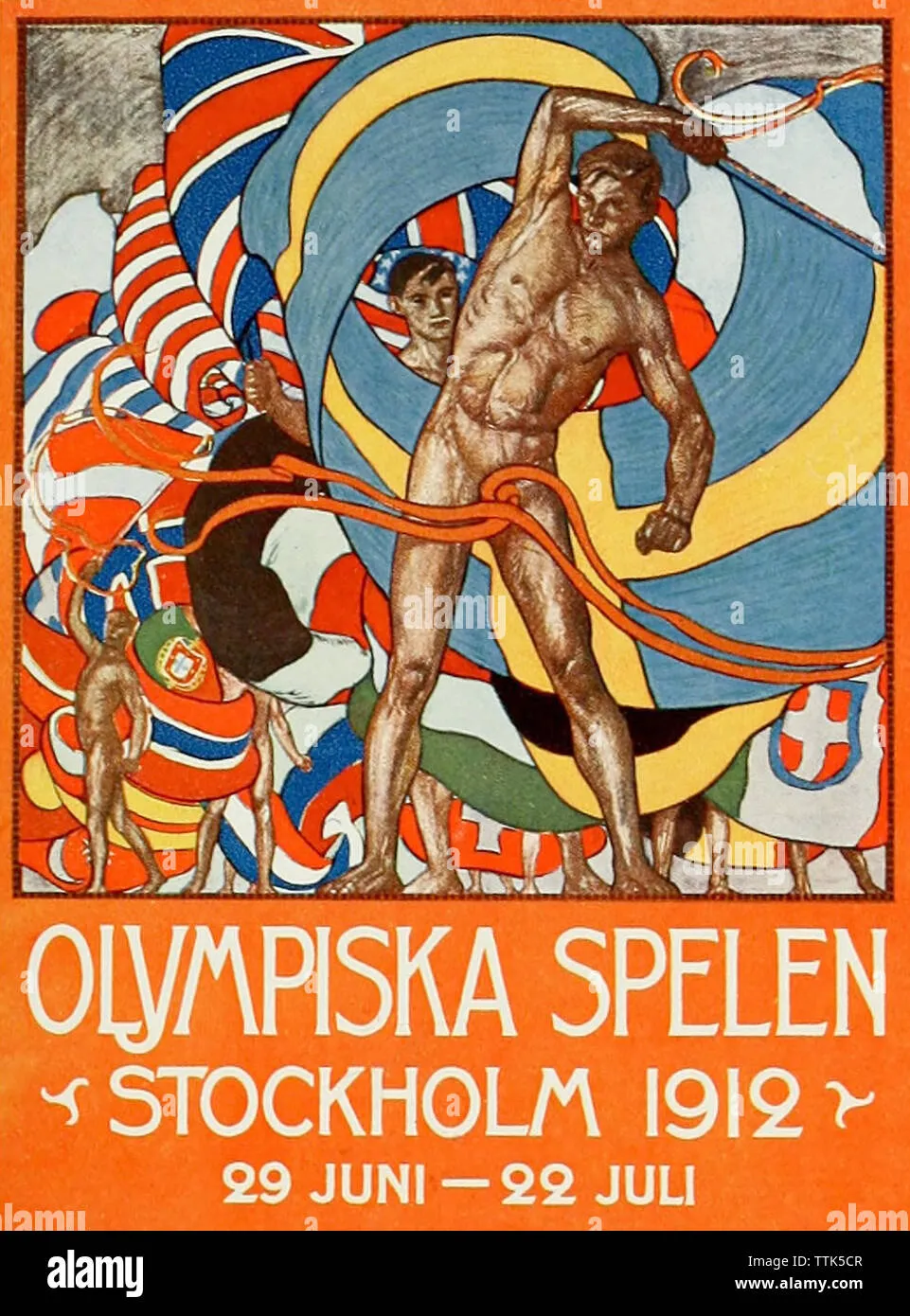 Photo: Stockholm Olympics, via c8.alamy.com
By the time electronic timing became standard at major American track meets in the 1970s, the hundredth-of-a-second barrier — once an unimaginable level of precision — had become routine. Today's timing systems at events like the US Olympic Trials can measure to the thousandth of a second.
The Gambling Debt That Runs Under Every Race
There's something almost funny about the fact that the technology behind every stopwatch at every high school track meet, every marathon, every swim competition in America traces its lineage to wealthy Englishmen arguing about horses.
But that's how technology often works. Precision tools get built because someone with money and a strong opinion needs to win an argument. The argument eventually becomes irrelevant. The tool survives and finds new applications that its creators never imagined.
The Victorian gamblers who demanded more accurate racing timers weren't thinking about Olympic sprinters. They were thinking about their bets. But in pushing clockmakers toward ever-finer precision, they built the foundation for every measured athletic performance that followed.
The next time a race clock flashes at a swim meet or a track final, the number you're reading is the long tail of that demand — a debt paid forward across two centuries, from a betting dispute on an English racecourse to a scoreboard in an American natatorium.